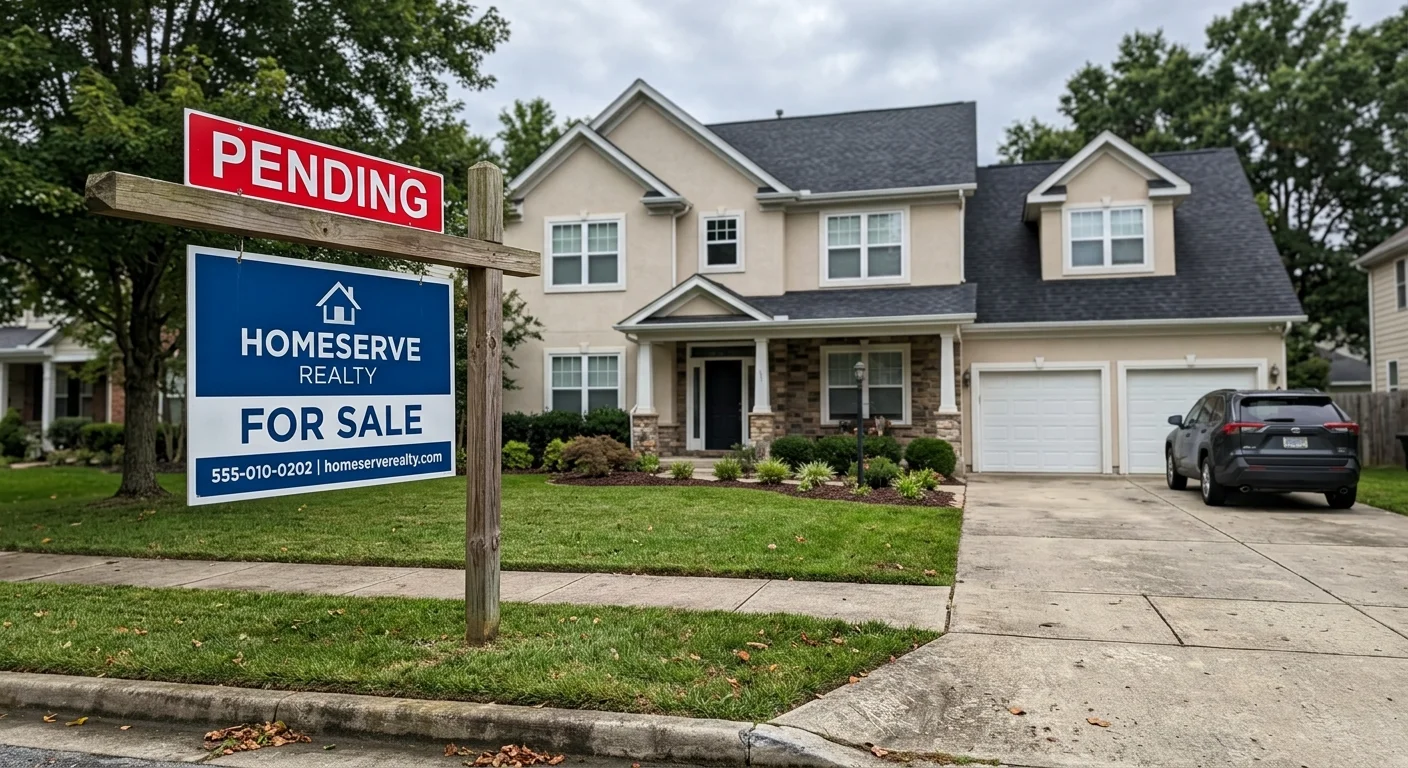


Condemnation real estate cases happen when a government agency, or a private company with legal authority, takes private property for public use and owes the owner just compensation. The same word also describes a building that a city has declared unsafe to occupy. This guide explains both meanings under U.S. law, what owners are paid, and what to do after a notice arrives. Rules vary by state, and this article is general information, not legal advice.
The Two Meanings of Condemnation in Real Estate
Condemnation in real estate points to two very different situations, and mixing them up causes real confusion.
The first is eminent domain, where a government takes your land, or part of it, for a project such as a highway, school, or utility line. You are paid for the property.
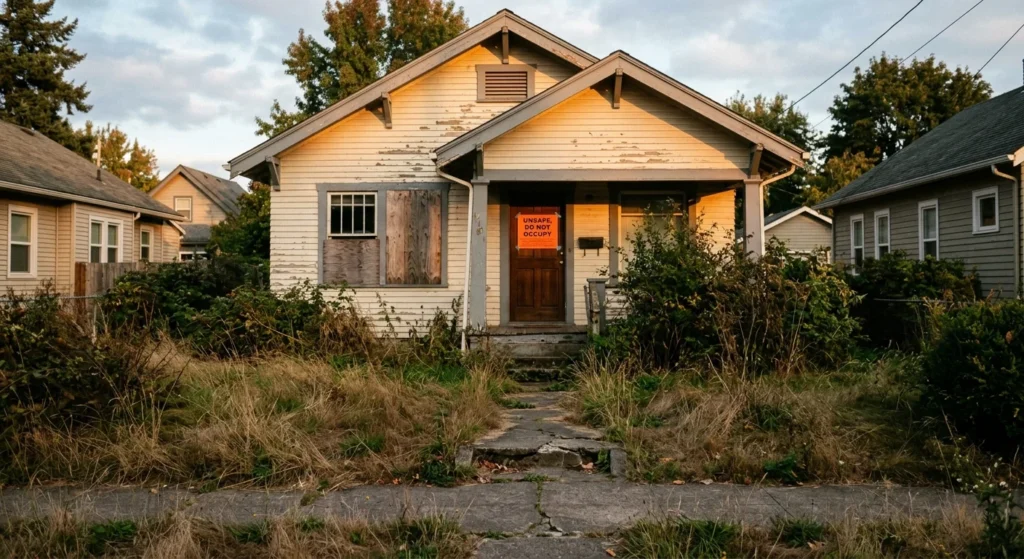
The second is code condemnation, where a local building or health department declares a structure unfit for people to live or work in. Nobody pays you in that case, and you usually receive orders to repair or demolish.
Most of this guide covers eminent domain, because that is where the money and the legal fights are. A later section covers condemned buildings.
How Eminent Domain Condemnation Works
1. The Constitutional Rule
The Fifth Amendment says private property cannot be taken for public use without just compensation. The Fourteenth Amendment extends that limit to state and local governments. Every condemnation case in the country starts from those two ideas.
Two tests follow. The taking must serve a public use, and the owner must receive just compensation. Courts have argued over both phrases for more than a century.
2. What Counts as Public Use
Roads, schools, airports, transit lines, and water systems are the classic examples. Utilities and pipeline companies can also hold condemnation power under state statutes, which surprises many landowners.
The hardest case is economic development. In Kelo v. City of New London (2005), the U.S. Supreme Court upheld a city’s taking of homes for a redevelopment plan by a 5-4 vote. The backlash was fast, and many states then passed laws narrowing what counts as public use. So the answer to “can they take my land for a private developer” now depends heavily on the state where you own it.
3. The Typical Process From Offer to Possession
Most cases follow the same arc, though names and deadlines change by state.
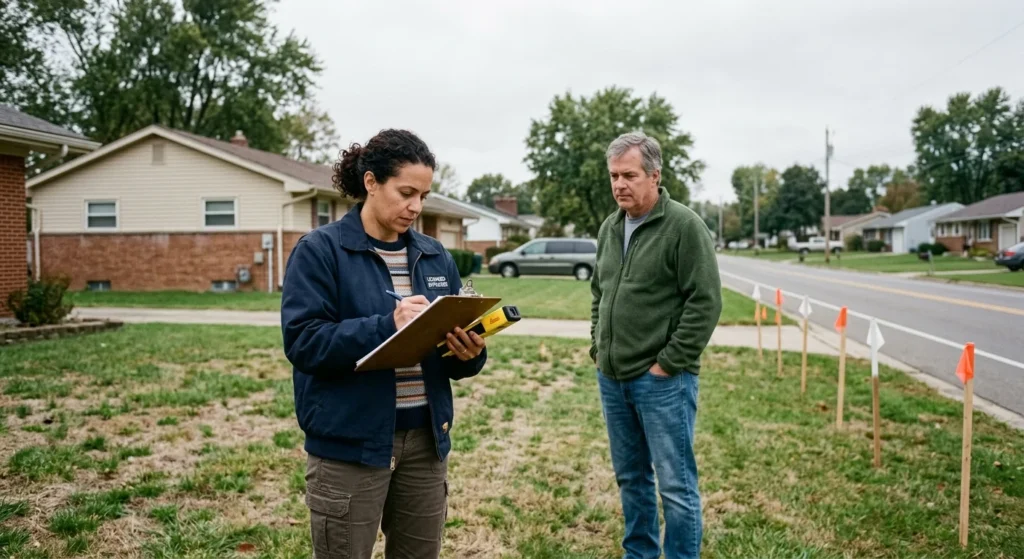
First comes notice and an appraisal. Utah’s property rights guidance says the condemning party must contact the owner before using eminent domain, and the owner may accompany the surveyors.
Next is a written offer. Arkansas requires a written good-faith offer before a condemnation proceeding begins, and it gives owners the right to hire their own appraiser and attorney.
If talks fail, the agency files a lawsuit. A court decides whether the taking is allowed and, in many states, a jury or commission sets the amount. Arkansas, for example, has the circuit court seat a twelve-person jury to decide just compensation.
Federal projects can move faster. Under the Declaration of Taking Act, the federal government can take title when it files and deposits its estimated compensation with the court, and the fight over the final figure continues afterward.
Can an Owner Stop a Condemnation?
Rarely, but it happens. Owners can challenge whether the taking serves a public use, whether the agency followed required procedures, and whether the amount of land is truly necessary for the project.
Courts tend to defer to an agency’s judgment about necessity, so most owners win on the money rather than on stopping the project. A realistic goal is often a better route: a smaller taking or a higher award.
Negotiated outcomes are common. An agency may adjust a design to protect a driveway or building when the owner brings a concrete, workable alternative.
Just Compensation: What Owners Actually Receive
1. Fair Market Value as the Baseline
The standard measure is fair market value, meaning the price a willing buyer would pay a willing seller when both understand the property’s relevant features. The valuation date is generally the date of the taking.
Fair market value is not your assessed value, your mortgage balance, or what you paid. A home bought in 2012 is valued against today’s market, not the market of 2012.
2. Partial Takes and Highest and Best Use
When only a strip of land is taken, the usual method compares the whole property’s value before the taking with the remainder’s value after it. The difference can include damage to the leftover land, such as lost access, a smaller yard, or an awkward lot shape.
Highest and best use matters too. A residential parcel in a corridor rezoned for commercial use may be worth more as commercial land, and an owner who proves that with expert testimony can seek the higher figure.
3. Relocation Help and Items Often Left Out
The Uniform Relocation Assistance and Real Property Acquisition Policies Act of 1970 gives displaced owners and tenants relocation benefits on federally funded projects. State programs cover many locally funded ones.
Sentimental value is not paid. Business goodwill and lost profits are treated differently from state to state, so a business owner should ask an attorney about them early.
4. The Tax Angle Most Guides Skip
A condemnation award can create a taxable gain. Section 1033 of the Internal Revenue Code lets owners defer that gain if they reinvest in similar property within a set window. The window is generally two years after the year the gain is realized, and three years for real property held for business or investment.
Talk to a CPA before spending the money, because the rules on what counts as replacement property are narrow.
Inverse Condemnation: When the Owner Files the Claim
Sometimes the government takes or damages property without ever filing a condemnation case. Flooding caused by a public drainage project is a common example, and so is a regulation that wipes out nearly all of a parcel’s value. The owner then sues, which is called inverse condemnation.
Knick v. Township of Scott (2019) helped these owners by letting them go straight to federal court instead of using up state remedies first. The strength of any claim still depends on the facts and the state.
What a Condemned Building Means
How Code Condemnation Happens
A city inspector finds serious hazards, such as structural damage, fire damage, no working utilities, or conditions that threaten health. The city posts a notice and issues an order to vacate or repair.
Terms like “unfit for habitation” or “unsafe structure” vary by municipality, so read your local code.
Your Options as an Owner
You can repair the property to meet code, demolish it, or appeal the order through the local administrative process. The appeal deadline is often short. Unpaid fines and demolition costs can become liens against the property.
Selling is possible but harder. Most conventional buyers and lenders avoid a condemned house, so buyers tend to be investors paying cash. Sellers still need to disclose the condition under their state’s rules.
What to Do After Receiving a Condemnation Notice
The first weeks matter more than most owners expect. A sensible sequence looks like this:
- Read the notice and write down every deadline, since missing one can cost you the right to object.
- Do not sign anything or accept the first offer before getting independent advice.
- Hire an appraiser who works for you, not the agency.
- Talk to an attorney who handles eminent domain, ideally before negotiating.
- Photograph the property inside and out, and gather leases, income records, and receipts for improvements.
- Ask about relocation benefits and about tax deferral.
Utah’s guidance recommends hiring counsel experienced in eminent domain if you end up in a condemnation lawsuit. The same advice makes sense even earlier, while an offer is still on the table.
Condemnation Risk for Buyers, Investors, and Lenders
Condemnation risk is easy to check before closing and expensive to ignore afterward. Look at state and county transportation plans for road widening, rail, or utility corridors near the parcel. Ask the seller whether any agency has contacted them about an easement or acquisition.
For commercial retail and rental property, read the lease’s condemnation clause. It usually says what happens to rent and the lease term after a partial taking, and how the award is split between landlord and tenant.

Many loan documents direct award proceeds toward the loan balance, so confirm that before you buy.
State Laws Keep Shifting
State legislatures keep revisiting condemnation after Kelo. North Carolina, for example, has a proposed constitutional amendment slated for the 2026 general election that would limit takings to public use and let either side request a jury to set just compensation.
Check your own state’s current statute before relying on any general summary, including this one.