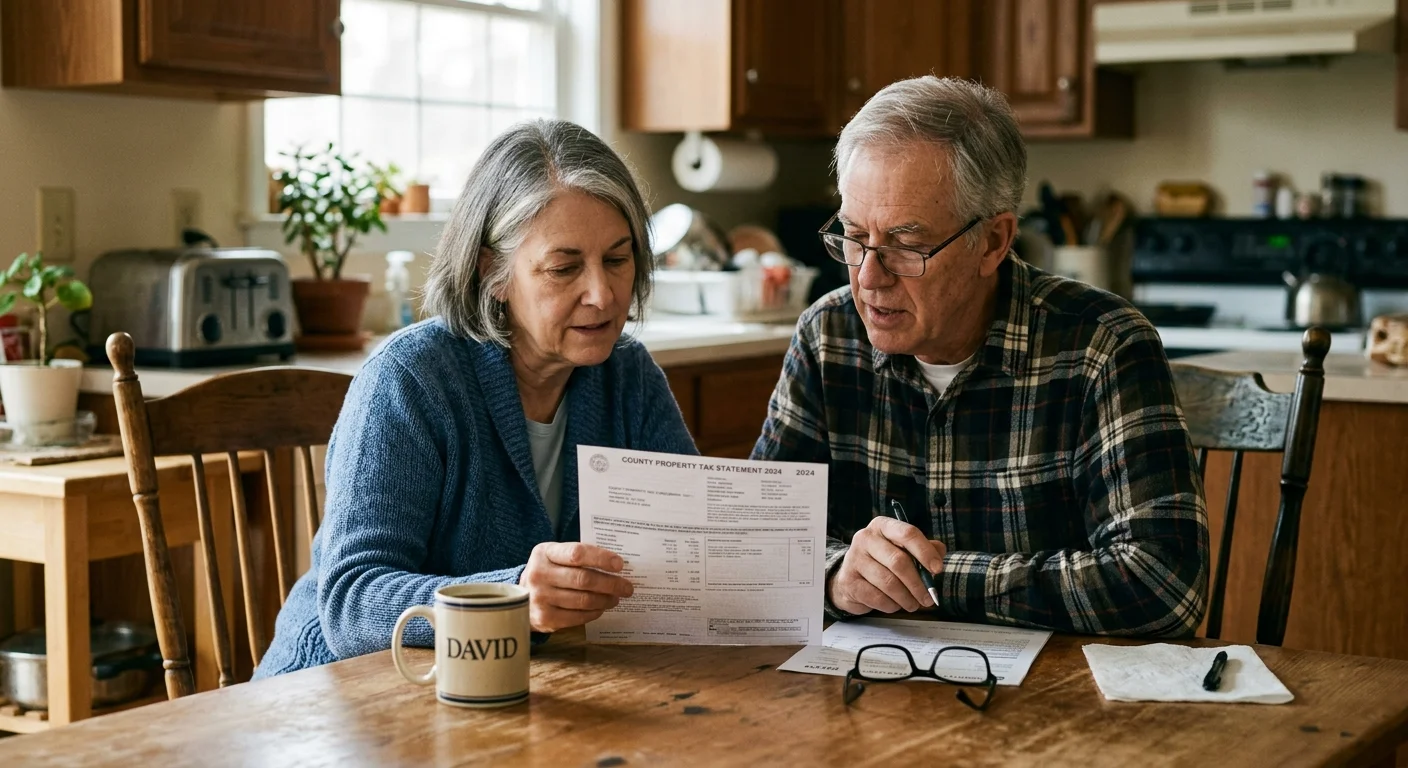

Many retirees hope to find a state that charges no property tax once they turn 65. The honest answer to which states have no property tax for seniors is that none do, at least not by age alone. Every state that taxes property still collects from older homeowners as a general rule. What changes is how much relief a senior can claim. A few states bring the bill to zero, or very close to it, for people who meet specific conditions. This guide shows where those states are, who qualifies, and which type of relief fits your situation.
Which states have no property tax for seniors in practice?
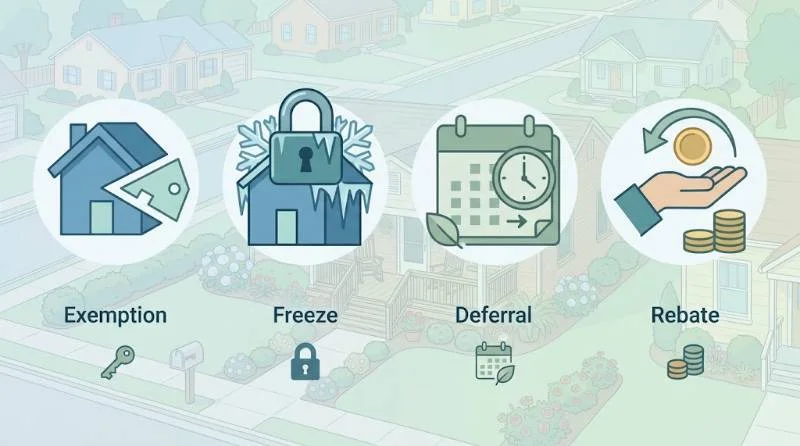
No state removes property tax for every senior. Relief comes in four main forms, and each works differently.
An exemption removes part of your home’s value from taxation. A freeze locks your bill or assessed value at a set level. A deferral lets you postpone payment until you sell. A credit or rebate returns money based on income.
Most programs ask for the same three things. You need to reach a minimum age, usually 65. The home must be your primary residence. Your income must fall under a limit set by the state or county. Some programs also require several years of ownership. Because of these conditions, two seniors in the same state can see very different bills.
Age cutoffs vary. Most states use 65, Missouri uses 62, and Washington starts at 61.
Alabama comes closest
Alabama gives the strongest answer to this question. Homeowners 65 and older are exempt from the state portion of property tax on their homestead. This applies at any income.
Seniors with net taxable income of $12,000 or less on their combined tax return get more. They are exempt from all property taxes on their principal residence, including county and city taxes. This income-based rule is the clearest route to a true zero bill for seniors.

Higher earners still owe county and municipal tax. Alabama keeps those rates among the lowest anywhere, so the remaining bill is often small. Seniors usually claim the exemption through the county tax assessor’s office, and the filing is not always automatic.
The exemption covers your primary home only. Rental properties and second homes stay fully taxable.
States with near zero senior bills
1: Alaska
Alaska exempts the first $150,000 of assessed value for residents 65 and older. A home assessed at or below that figure can owe close to nothing. Local governments set their own rates, so the final bill depends on where you live. The yearly Permanent Fund Dividend paid to residents can offset what remains.
2: Florida
Florida has no state income tax, and many retirees assume that means no property tax. It does not. Florida’s senior relief is mostly local. Counties and cities can adopt extra homestead exemptions for seniors with limited income. Some also offer exemptions for long-term residents. Whether you qualify depends on your county, so neighbors across a county line can see different bills. The Save Our Homes cap also limits yearly assessment increases on homesteaded property.
3: Texas
Texas has no state income tax and no state property tax. Local governments and school districts collect the tax instead. Homeowners 65 and older get an extra school tax exemption on top of the standard homestead exemption. At the time of writing, the standard amount is $140,000 and the senior add-on is $60,000. Seniors can also freeze their school district tax at the level of the year they qualify. A home valued near $200,000 or less can see a school bill close to zero. County and city taxes still apply, and some local governments add their own senior breaks.
4: Colorado and Washington
Colorado exempts 50 percent of the first $200,000 of a home’s value for qualifying seniors. The program requires at least ten years of living in the home. Colorado also runs deferral and work-off programs. Washington sorts senior homeowners into three income tiers, starting at age 61. The lowest income tier gets the largest benefit.
States that freeze senior property taxes
A freeze does not erase your tax. It stops the bill from growing, which matters on a fixed retirement income. Ten states run a senior freeze of some kind: Arizona, Arkansas, Illinois, Louisiana, Missouri, New Jersey, Oklahoma, South Dakota, Texas and Washington.
The mechanics differ. Some freeze the home’s assessed value. Others freeze the tax amount. A few reimburse any increase above a base year.
A frozen assessed value shields you from market swings but not from rate increases. A frozen tax amount shields you from both.
Missouri’s version is a credit for owners 62 and older, and it works only in counties that have opted in. New Jersey’s Senior Freeze reimburses increases above a base-year bill. It requires age 65 or older, an income below a yearly cap, and long ownership of the home.
Timing matters. In many programs the freeze starts when you qualify, not when you buy. Applying late can lock in a higher base than applying on time.
States that defer senior taxes
Deferral programs let you postpone payment. The state or county covers the bill and places a lien on your home. You repay with interest when you sell, or your heirs repay when the home passes to them.
California’s postponement program works this way. California has no senior homestead exemption, so postponement is the main direct relief there. Minnesota defers the part of the bill above 3 percent of household income for seniors 65 and older under an income cap. Colorado runs its own deferral program as well.
Think of a deferral as a loan against your home equity. Seniors who plan to leave the house to children should weigh that cost. It suits owners with high home value and tight monthly cash.
States where age alone does little
Some states give seniors nothing for age alone. Nevada reserves its exemptions for veterans, surviving spouses and blind residents. California adds a tax base transfer for owners 55 and older who move, which helps downsizers.
Many states route relief through a rebate or credit instead of an exemption. These circuit breaker programs refund part of the bill based on income. You pay first and get money back later.
Pennsylvania pays up to $1,000 to seniors 65 and older with income up to $45,000. Idaho cuts bills by up to $1,500 for seniors 65 and older with income up to $37,000. Tennessee reimburses tax on the first $30,000 of value for seniors with income up to $31,600. These caps change, so confirm current figures with the state.
Income tax is not property tax
Florida, Nevada, Texas and Wyoming charge no state income tax, and that confuses many retirees. Income tax and property tax are separate bills. A state can skip one and still collect plenty of the other.
Rates matter too. Hawaii, Alabama, Colorado, Louisiana, South Carolina and Wyoming keep effective rates low, so the bill is small before any senior break applies. A low rate plus a modest exemption can beat a high rate with a generous one.
Disabled veteran exemptions
Age is not the only route to a zero bill. Veterans with a 100 percent disability rating can owe nothing on their home in several states. Examples include Texas, Virginia, Michigan, New Jersey and South Carolina.
Many recipients are seniors, and the benefit often passes to a surviving spouse. Rules on ratings, residency and spouse coverage vary, so check the exact wording before you rely on it.
Matching relief to your situation
The right program depends on your income, your home value and how long you plan to stay. These rules of thumb help.
A retiree with very low income gains the most from a full exemption or a circuit breaker rebate. Alabama’s income rule and Pennsylvania’s rebate fit here. A senior on a middle income with a fast-rising assessment gains more from a freeze. Texas and New Jersey build their programs around that need.
A high income owner with a valuable home often cannot get an exemption. Deferral may be the only option, and it comes with interest. Flat dollar exemptions such as Alaska’s help most when the home is modest, because they cover a bigger share of its value.
These programs rarely help renters, with a few exceptions. Pennsylvania’s rebate covers rent as well as property tax. Married couples should check whether one spouse’s age or combined income sets the limit.
How to apply
Most programs do not apply themselves. You have to file, and the office that takes the form depends on where you live. It may be the county assessor, the tax collector or the state revenue department.
Gather these documents first: proof of age, proof that the home is your primary residence, and income records for the required year. Joint owners and spouses may need to sign too.
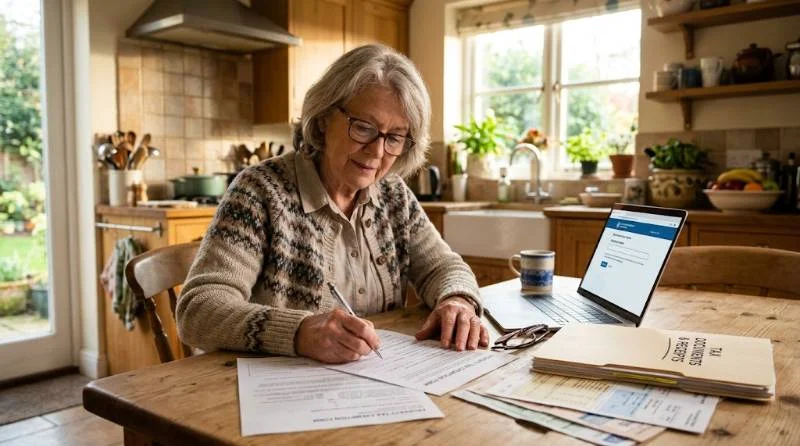
Watch the deadlines. Many offices set a filing date months before the tax bill arrives. A missed deadline can mean waiting a full year.
Plan to renew. Some programs ask you to reapply every year, and income-based ones often recheck your finances. If you move, the exemption usually ends, and the new home needs its own application.
Before you move
Do not pick a state on a single headline number. Senior relief often depends on rules that take time to meet. A ten year rule in Colorado, a cutoff date in New Jersey and a county opt-in in Missouri can delay your benefit.
Ask the county assessor three questions before you buy. Which exemptions apply to my age and income? When does the benefit start? How is the assessed value reset after a sale?
The reset matters more than most buyers expect. In states with assessment caps, a purchase can raise your taxable value to the full sale price. The cap that protected the seller then resets for you. Check this before you assume a neighbor’s low bill will be yours.
Laws also change. Several states updated their senior programs for 2026, and lawmakers keep debating larger exemptions. Confirm current limits on your state revenue department site before you file or relocate.