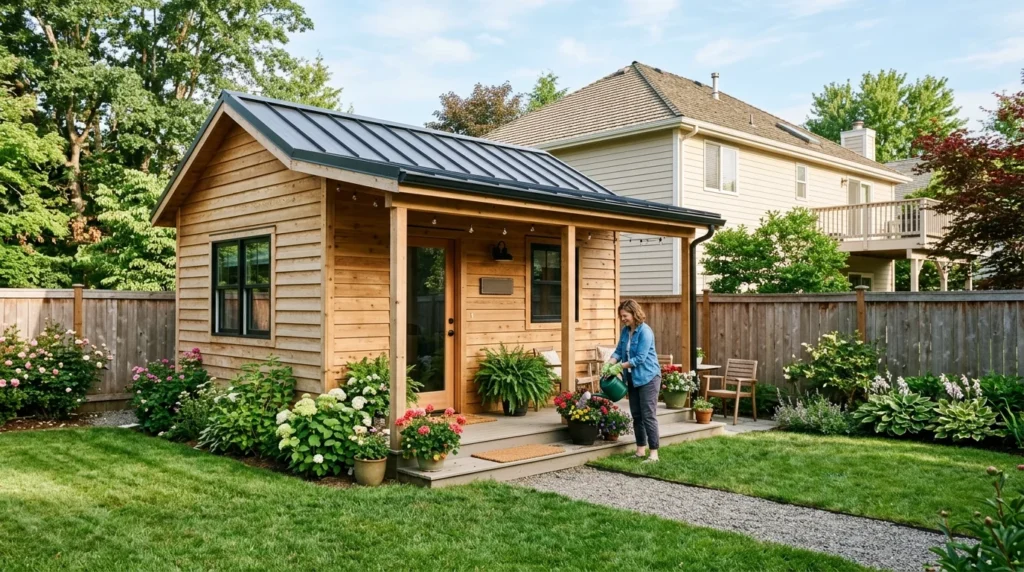

An ADU, short for accessory dwelling unit, is a small, self-contained home built on the same lot as a main house. If you are asking what an ADU in real estate is, the answer is a legal second residence with its own kitchen, bathroom, and sleeping area. It can sit in the backyard, over a garage, or inside the primary home.
ADUs matter because they change how one lot can be used, valued, financed, and sold. This guide covers the types, costs, zoning rules, tax effects, and the buyer and seller issues most articles skip.
ADU Meaning and What Qualifies a Unit
An accessory dwelling unit is a secondary housing unit on a lot that already has a primary residence, usually a single-family home. “Accessory” means it is smaller than and subordinate to the main house. “Dwelling” means someone can live in it year-round.
To count as an ADU in most US cities, a space needs a permanent sleeping area, a full bathroom, and cooking facilities. Most codes also expect a separate entrance. A spare bedroom with a mini fridge does not qualify, and neither does a workshop with a futon.
Legal status matters as much as layout. A unit is an ADU in real estate terms only when the city has permitted it, inspected it, and recorded it as a dwelling. A converted garage with no permit is just an unpermitted conversion, and that difference comes up again at sale.
Other Names You Will See in Listings
ADUs go by many names depending on the region and the agent writing the listing. You will see granny flat, in-law suite, backyard cottage, casita, carriage house, laneway house, and secondary suite. Some are regional habits, and some describe a building type, such as a carriage house above a detached garage.
Read the wording closely. “In-law suite” can mean a fully permitted second unit, or it can mean a finished basement with a bathroom and no kitchen. Ask for the permit history before you assume it counts as living space.
Main Types of ADUs
Building departments sort ADUs into a few categories, and the category affects cost, setbacks, and approval time.
1. Detached ADUs
A detached ADU is a separate building in the backyard or side yard. It gives the most privacy and the most design freedom. It is also the most expensive type because it needs its own foundation, roof, and utility connections.
2. Attached ADUs
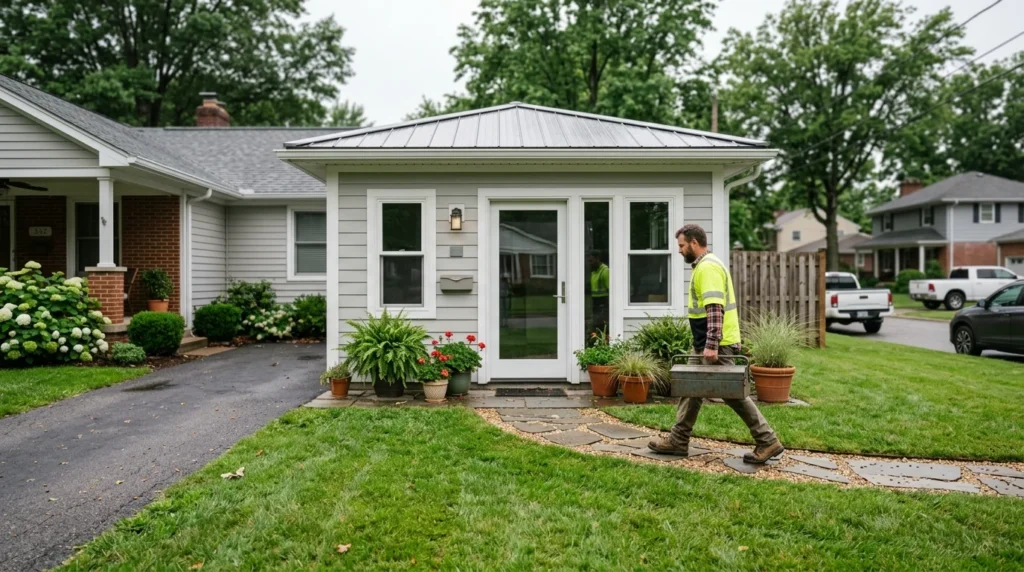
An attached ADU shares at least one wall with the main house, usually as an addition. It costs less than a detached unit because the existing structure supports part of it. Shared walls and noise are the tradeoff.
3. Garage Conversions
Converting a garage turns existing space into living space, which keeps cost and construction time down. The catch is parking. Some cities require you to replace the spaces you lose, while others, including California in many cases, do not.
4. Basement and Attic Conversions
An interior ADU is carved out of existing space inside the home, such as a basement with a walkout door. Ceiling height, egress windows, and moisture control decide whether it passes inspection. These conversions are common in older Northeast and Midwest homes with full basements.
5. Junior ADUs
A junior ADU, or JADU, is a smaller unit built within the walls of an existing single-family home. California caps it at 500 square feet, requires an efficiency kitchen, and lets it share a bathroom with the main house. The label comes from California law, though similar small interior units exist elsewhere under other names.
ADU vs. Duplex vs. Guest House
These terms get mixed up, and the difference affects financing and resale.
A duplex is one building with two units, zoned for two-family use and usually built that way from the start. Each side can often be sold separately. An ADU sits on a lot zoned for one primary home, and in most places it cannot be sold apart from that home.
A guest house is a looser term. It may be a legal ADU, or it may be a permitted accessory structure with no kitchen, which makes it guest space rather than a rental unit. Only a unit with a kitchen, a bathroom, and permitted dwelling status counts as an ADU for appraisal and rental purposes.
A few states are starting to change the “cannot be sold separately” rule. California’s AB 1033 lets cities allow ADUs to be sold as condominiums, though each city has to opt in.
Why Homeowners Build ADUs
The most common reasons are rental income, housing for family, and space for a changing household.
Rental income draws many owners. A long-term tenant in a backyard unit can cover a large share of a mortgage in expensive metros, though the amount depends entirely on local rents.
Family use is just as common. Adult children, aging parents, and caregivers can live close by while keeping their own front door. AARP’s guide “The ABCs of ADUs” covers this use in detail, including design choices for older adults.
Some owners build a home office, or plan to move into the ADU later and rent out the main house. UC Berkeley’s Terner Center has published survey research on how California ADU owners use their units, which is useful if you want local data behind a decision.
How Much an ADU Costs to Build
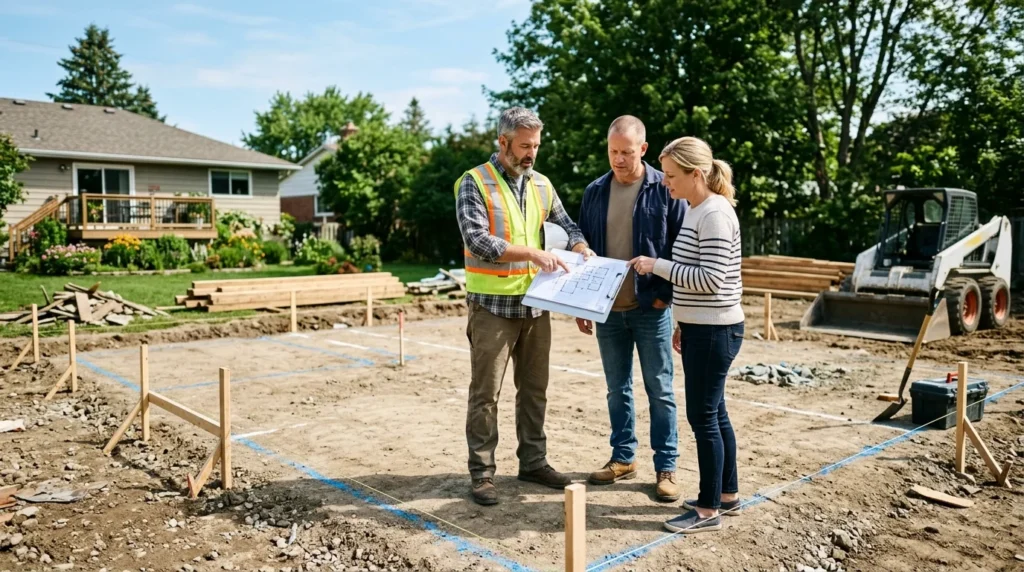
Cost depends on type, size, site conditions, and local labor prices, so one national number would mislead you. A garage or basement conversion usually costs far less than a new detached unit. A custom detached ADU in a high-cost metro can run into the hundreds of thousands of dollars.
Several line items catch owners off guard:
- Design and engineering fees
- Permit fees and utility connection charges
- Site work such as trenching for water, sewer, and electrical lines
- Fire sprinklers or an upgraded electrical panel if the city requires them
- Landscaping and fencing after construction
Impact fees vary by city. California, for example, exempts ADUs under 750 square feet from local impact fees. Get at least three written bids, and ask each contractor to price the full scope, not just the structure.
How an ADU Affects Property Value and Taxes
An ADU usually raises what a home can sell for, but the size of the increase depends on the market, build quality, and whether the unit is permitted. Appraisers typically look at sales of comparable homes with ADUs. In markets with few of them, finding comparables is harder, so ask a local appraiser or agent how ADUs have been valued nearby before you set a budget.
Rental income adds to the appeal. Buyers who plan to live in one unit and rent the other will pay for that flexibility.
Property taxes are the part many owners forget. In most places, new construction gets added to your assessed value, so expect a higher bill once the ADU is finished. California’s Proposition 13 reassesses only the newly built portion rather than the whole property, while other states handle it differently. Confirm the rule with your county assessor.
Zoning, Permits, and State Laws
Once you know what an ADU is in real estate terms, the next question is whether your lot can host one. Zoning is local, and it decides that. Typical limits cover maximum size, height, setbacks from property lines, parking, and whether the owner must live on site.
States have been overriding local bans. California requires cities to approve qualifying ADUs through a streamlined process and has removed owner-occupancy rules for them. Oregon requires cities above a set population to allow ADUs on lots with single-family homes. Washington’s HB 1337 requires cities to allow at least two ADUs per lot in urban growth areas. Many other states leave the decisions to individual cities, so rules can change from one town to the next.
Homeowners associations are a separate hurdle. Covenants in many HOAs ban or limit ADUs, and state law may or may not override them. California limits HOA bans on ADUs, but most states have no similar protection.
Before you hire anyone, call the local planning department and ask five things: whether your lot qualifies, the maximum size, the setbacks, any parking or owner-occupancy rules, and the permit timeline.
Rules for Renting Out an ADU
Short-term rental rules are separate from ADU rules. Many cities that allow ADUs ban Airbnb-style stays or require rentals of 30 days or more. California bars rentals under 30 days for ADUs built under its streamlined rules.
Landlord-tenant law applies as it would to any rental, including security deposit limits, habitability standards, and fair housing rules. Tell your insurance carrier before a tenant moves in, because a standard homeowners policy may not cover rental use.
Financing an ADU
Owners usually pay with savings, a home equity loan or HELOC, a cash-out refinance, or a renovation loan. Fannie Mae’s HomeStyle Renovation loan and Freddie Mac’s CHOICERenovation loan fold remodel costs into a mortgage. FHA’s 203(k) program does the same for eligible properties. Terms change, so ask a lender which products fit your project.
Buyers get a different benefit. Under Fannie Mae guidelines, a buyer of a one-unit property with an ADU can count rental income from the unit toward qualifying, subject to limits. Freddie Mac has comparable provisions for some loans. That can make a home with a permitted ADU easier to afford.
Buying or Selling a Home With an ADU
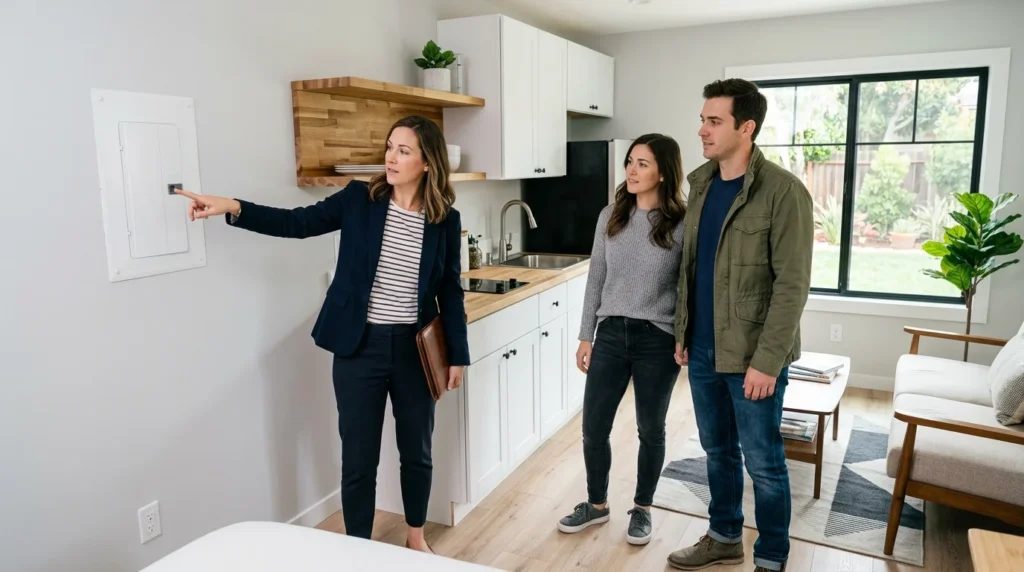
The first question for any buyer is whether the ADU is permitted. Ask the seller for the permit, the final inspection sign-off or certificate of occupancy, and records of past tenants. An unpermitted unit can cause trouble with appraisals, insurance, and lending, and a city can order it removed or brought up to code at the owner’s expense.
Buyers should also check:
- Whether the ADU has separate or shared utility meters
- Whether its square footage appears in the home’s tax and listing records
- Any rental restrictions or owner-occupancy requirements
- Insurance coverage for the structure and for rental use
- Egress, smoke detectors, and heating that meet current code
Sellers do better when they list a permitted ADU clearly, with square footage, rent history, and permit documents attached. An unpermitted unit narrows the buyer pool, since many lenders will not count it. Some sellers legalize the unit before listing, which can take months in cities with permit backlogs.
Is an ADU Worth It?
An ADU makes sense when you have the space, a clear use for it, and a budget buffer for surprises. It pays off best in markets with high rents and tight housing supply. It is a harder case where construction costs are high and rents are low, because payback can stretch past a decade.
Run the numbers with local rent comparisons and real contractor bids, not national averages. Then weigh the non-financial side, such as a home for a parent, a quieter office, or a plan to downsize on your own property.