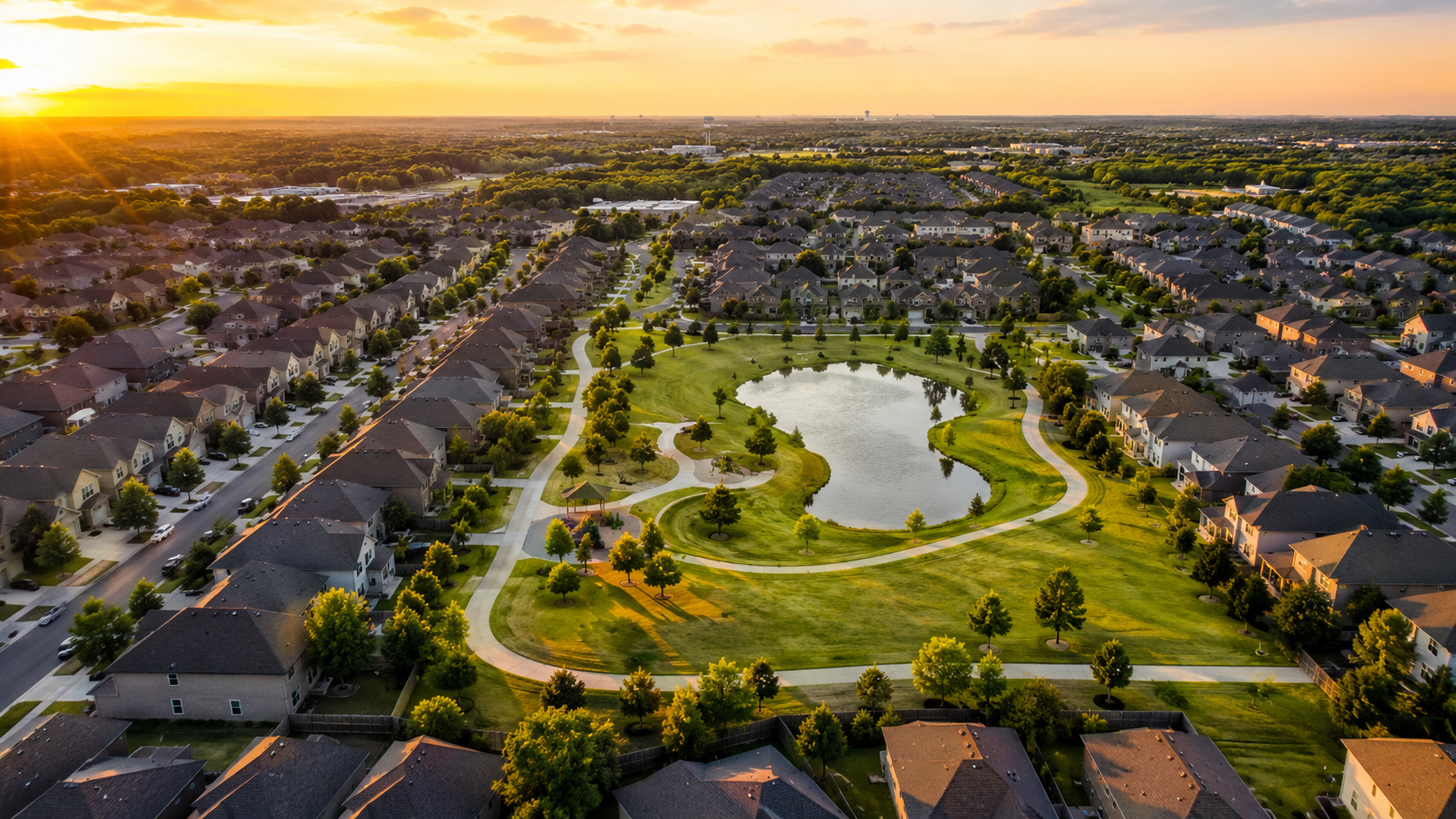


The Idaho real estate commission usually means one of two things: the percentage fee an agent earns on a home sale, or the Idaho Real Estate Commission, the state agency that licenses and disciplines every agent in Idaho. Most people searching this term want the first answer, the dollar cost of commission, so that comes first. The agency behind the licensing system comes next, since it shapes who you are allowed to hire.
What Idaho Real Estate Commission Means
A real estate commission is the fee a seller agrees to pay at closing in exchange for an agent’s help pricing, marketing, and selling a home. It is almost always a percentage of the sale price rather than a flat hourly rate, and it is split between the seller’s agent and the buyer’s agent once the deal closes.
The Idaho Real Estate Commission, written with capital letters, is a different thing entirely. It is the government body that writes and enforces the state’s license law, and every agent working in Idaho has to answer to it. Both meanings matter if you are about to buy or sell, so this guide covers each in turn.
Average Real Estate Commission Rates In Idaho
Idaho commission rates sit close to the national average. Clever Real Estate’s February 2026 survey of local agents put the average total commission at 5.71 percent, almost identical to the 5.70 percent national figure the same survey found. A separate Real Estate Witch survey of Idaho sales came in slightly lower at 5.61 percent, made up of roughly 2.79 percent for the listing agent and 2.82 percent for the buyer’s agent.
FastExpert’s poll of agents landed a bit higher, at 5.69 percent. On a $454,000 home, the median value FastExpert cited for Idaho, that works out to about $25,832 in total commission due at closing.
Listing fees alone typically fall between 2.00 percent and 4.00 percent, according to Clever, and rates are always open to negotiation since no Idaho law sets a fixed percentage. The final number tends to depend on the home’s price, the local market, and how much marketing and support the seller wants from their agent.
How The Commission Splits Between Agents
A typical Idaho sale involves four parties: the listing agent, the listing agent’s brokerage, the buyer’s agent, and the buyer’s agent’s brokerage. FastExpert walks through a $500,000 sale at a 5 percent rate this way: the $25,000 total splits roughly in half between the two sides, and each brokerage then splits its $12,500 half again with its agent, leaving each agent with around $6,250 before taxes and business expenses.

The exact split between an agent and their brokerage depends on that agent’s individual contract. Newer agents often keep a smaller cut while they build a client base, and established agents on a high split plan can keep 80 percent or more of what their side of the deal earns.
Commission Costs By Home Price
Here is how commission plays out at different price points in Idaho’s largest cities, based on Redfin’s local market data.
| City | Median Home Price | Commission At 1.5% | Commission At 3% | Commission At 5% |
| Boise | $490,000 | $7,350 | $14,700 | $24,500 |
| Meridian | $527,450 | $7,912 | $15,824 | $26,373 |
| Nampa | $405,900 | $6,089 | $12,177 | $20,295 |
At the statewide average rate of roughly 5.71 percent, Clever’s 2026 data shows a $360,000 home carries about $20,556 in total commission, a $720,000 home carries about $41,112, and a $1,200,000 home carries about $68,520. The percentage stays fairly flat across price points, but the dollar amount climbs fast, which is part of why higher priced listings often see more room for negotiation.
Who Pays The Commission
In most Idaho transactions, the seller pays the full commission out of the proceeds at closing, and the cost is generally built into the home’s listing price. Because of that, buyers end up covering part of the cost indirectly through what they pay for the house, even though no check for commission ever comes out of their pocket directly.
Seller and buyer each sign a separate written agreement with their own agent that spells out the agreed rate before any offer goes in. That keeps both sides clear on what they owe well before anyone reaches the closing table.
It helps to keep commission separate in your mind from other closing costs. Earnest money, title insurance, transfer fees, and lender charges are all billed on their own line items, and none of them fund the agents involved. Commission is its own cost, negotiated and disclosed on its own, which is part of why the 2024 rule changes focused specifically on how and when it gets discussed.
What Changed With The 2024 Commission Rules
Two national rule changes reshaped how commission works in Idaho starting in 2024. Buyers must now sign a written agreement with their agent, laying out that agent’s fee, before the agent can tour homes with them. Agent compensation is also no longer displayed on MLS listings in most markets, according to Redfin.
Sellers can still choose to offer a concession that covers some or all of a buyer’s agent fee as part of their listing terms, but that offer is now negotiated deal by deal rather than advertised automatically through the MLS. Houzeo notes this shift moves more of the buyer’s agent commission decision into the seller’s hands on each individual sale, rather than following one blanket market practice.
For buyers, the practical change is simple: read the buyer representation agreement closely before signing, and ask directly what happens if the seller declines to cover any part of your agent’s fee.
The Idaho Real Estate Commission Agency
The Idaho Real Estate Commission was created in 1947 to write and enforce the state’s real estate license laws, according to Study.com’s overview of the agency. It exists to protect the public, not the industry, though it works closely with licensed brokers to do that.
The agency is self-governing and funded by the license and application fees it collects, rather than by general state tax dollars. Five governor-appointed commissioners run it: four working brokers from different parts of Idaho and one public member from outside the industry. The group meets about nine times a year to review policy, enforcement cases, and rule changes.
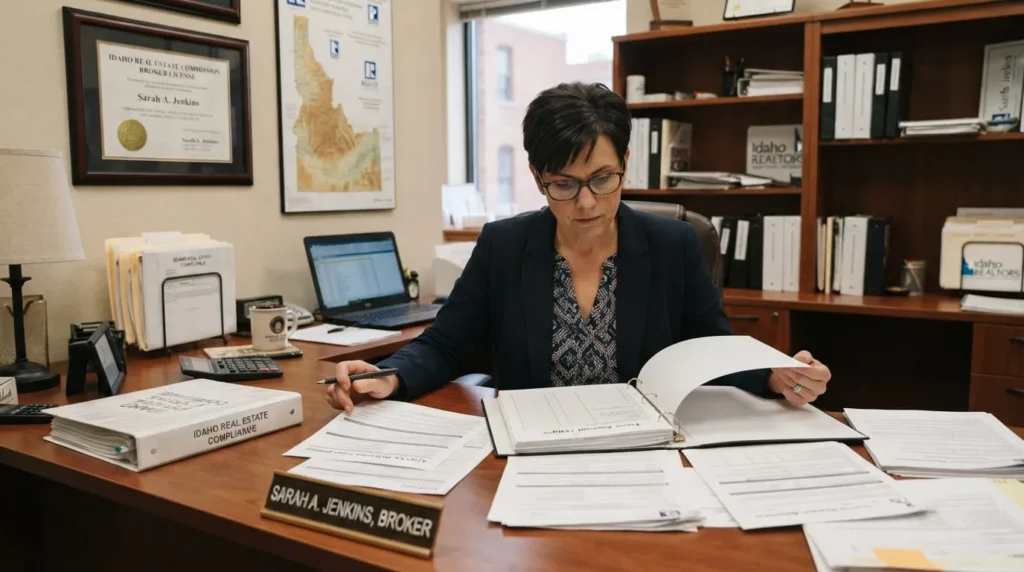
Day to day work falls to an executive director and a staff of 14 full-time employees. One of the agency’s departments, Education and Licensing, issues and renews agent licenses, approves the curriculum used in pre-licensing and continuing education courses, and sets the content covered on the state licensing exam. The agency’s other departments handle complaint investigations and internal administration.
How Agents Get Licensed In Idaho
Before anyone can call themselves a real estate agent in Idaho, they have to pass a state licensing exam administered by Pearson VUE on behalf of the Idaho Real Estate Commission. The exam covers general powers and duties of the commission, license law and agency rules, brokerage representation, and real estate math, including commission calculations, loan costs, and closing costs.
Passing the exam is only the start. New licensees still need a supervising broker, ongoing continuing education to renew their license, and a clean record with the commission’s enforcement department to keep practicing.
What The Commission Regulates And Enforces
Idaho Code gives the commission broad authority to write and enforce reasonable rules for the industry. That authority includes investigating consumer complaints against agents and brokers, auditing brokerage trust accounts where client funds are held, and holding formal hearings that can end in license suspension or revocation for serious violations.
This oversight is one reason it is worth checking that any agent you hire holds an active Idaho license in good standing before you sign a representation agreement.
How To Lower Or Negotiate Your Commission
Since no Idaho law fixes the commission rate, sellers can negotiate directly with a listing agent, especially on higher priced homes where a lower percentage still adds up to a solid payday for the agent. Discount brokerages operating in Idaho, including Redfin’s local team, commonly list homes for 1.5 percent, according to Clever’s brokerage comparison, sometimes dropping to 1 percent if you also buy your next home through the same company.
Other options include selling for sale by owner, which skips a listing agent’s fee entirely but also means handling marketing, showings, and paperwork yourself, or using a flat fee MLS service that lists a home for a set price instead of a percentage. Houzeo notes some flat fee services can get a listing live on the MLS within 24 hours of signing up.

Whichever path you choose, ask any agent or brokerage to put their fee and services in writing before you sign anything, so nothing changes once you reach the closing table.
Buyers have room to negotiate too. Since the 2024 changes put buyer’s agent fees in a separate written agreement, you can ask your agent about a lower flat fee or a reduced percentage, especially if you already found the home yourself online and need less hands-on searching help. A shorter, more limited scope of service is a reasonable thing to ask for if it fits how you are actually house hunting