
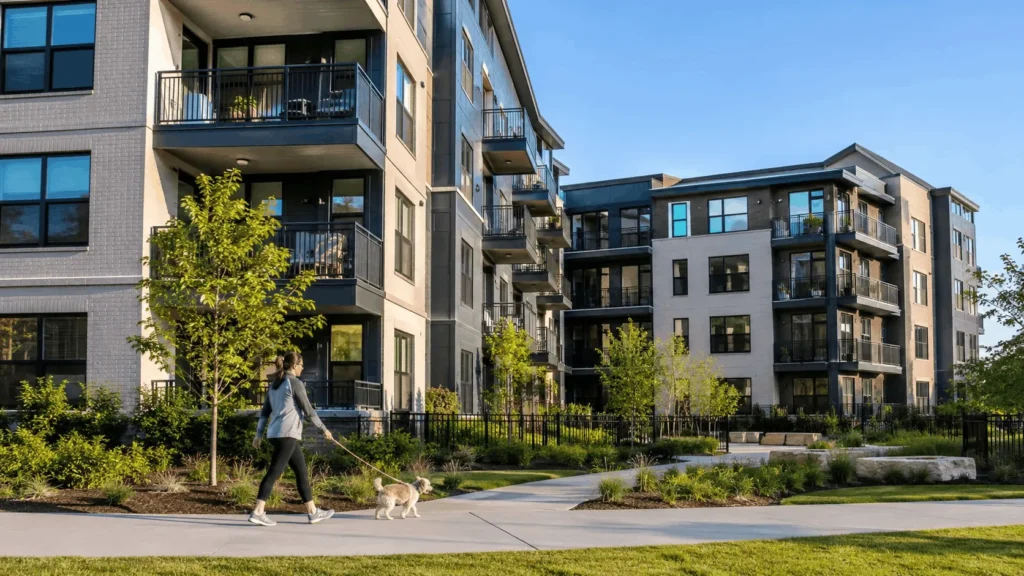

Greystar Real Estate Partners is a privately held real estate company that manages more apartments than any other operator nationwide, spanning property management, investment management, and development under one organization. Founded in 1993 by Bob Faith in Charleston, South Carolina, it has grown from a single-market apartment manager into a global platform overseeing more than 1.1 million multifamily units and student beds. Here is a plain look at what the business actually does, how it reached this scale, and how renters, investors, and job seekers each interact with it.
What the Company Does
Greystar operates as a vertically integrated real estate company, meaning it handles several sides of the rental housing business itself rather than outsourcing pieces to separate firms. That structure is part of what separates it from a typical local property manager.
The business breaks down into three core functions. Property management is the most visible aspect to renters, covering leasing, maintenance, and daily operations in apartment communities. Investment management works on behalf of pension funds, financial institutions, and private equity clients seeking exposure to rental housing without operating the properties themselves. Development and construction consulting cover new projects from site selection through completion.
The portfolio itself spans several sub-sectors rather than one type of housing. That includes traditional multifamily buildings, student housing near college campuses, senior and active adult communities, single family rentals, mixed use projects, life sciences buildings, and logistics assets. Few competitors operate across that many property types under a single brand.
The company remains privately held, controlled primarily by founder Bob Faith and long-term institutional backers rather than public shareholders. Outside investors that have held stakes in the business at various points include New York Community Bank and Capital One, though day-to-day control has stayed with Faith and the leadership team he built.
How the Company Got Started
Bob Faith started the company in 1993 with a specific goal in mind: build a rental housing firm that ran with more consistency and stronger service standards than the fragmented, locally owned apartment managers common at the time. He still serves as chairman and chief executive today, and the company has remained privately held throughout its growth, backed by institutional and private investors rather than a public stock listing.
The early years centered on property management contracts in a small number of markets. Growth picked up through the 2000s and 2010s as the company added investment management and development capabilities, then took the model overseas, entering the United Kingdom in 2013 and South America in 2016 through a fund based in Chile.
Major Acquisitions That Shaped the Company
Two deals in particular pushed the company into a different weight class. In 2017, it acquired Monogram Residential Trust’s apartment portfolio in a transaction reported at roughly 4.4 billion dollars, adding thousands of units across multiple states in a single move.
The following year, it acquired EdR (Education Realty Trust), a major manager of college housing communities, for close to 4.6 billion dollars. That deal folded a large student housing portfolio into the existing multifamily business and made the company a dominant player in campus housing as well as traditional apartments.

The deal-making pace brought industry recognition alongside it. The company won Capital Raise of the Year, North America at the 2017 PERE Global Awards, then took home three separate category wins at the 2019 PERE Global Awards, including Global Residential Investor of the Year. Awards from a trade publication are not the same as a customer review, but they do reflect how real estate finance peers viewed the company during its fastest growth period.
Property Management for Residents and Owners
For renters, the company shows up as the name behind the leasing office, maintenance requests, and resident portal at thousands of apartment communities. Its website lists available units directly, with 3D floorplans, amenity photos, and neighborhood details for each property, along with online rent payment and maintenance request tools for current residents.
On the ownership side, the company manages buildings on behalf of outside owners rather than owning every property it operates. Clients include pension funds, financial institutions, private equity firms, and lenders that have taken over distressed properties. That split matters for anyone researching a specific building: living in or working with a community it manages does not always mean the company owns that building, only that it runs the day to day operations there.
Investment Management for Institutional Partners
Alongside property management, the company runs an institutional investment platform that raises and deploys capital for outside investors, mainly pension funds and other large institutions seeking rental housing exposure. As of the first quarter of 2026, the investment advisory business reported roughly 36.5 billion dollars in regulatory assets under management, with gross assets under management across the wider platform above 79 billion dollars.
The strategy targets gateway cities and select growth markets with strong employment bases and population growth, rather than spreading capital evenly across every city The company’s own owned portfolio under this arm runs into the hundreds of thousands of units, separate from the properties it manages on behalf of other owners.
Development and Construction
The development arm handles projects from land acquisition through completion, including pre-development consulting for outside owners who want that expertise without hiring a separate developer. The company reports a track record above 35 billion dollars in completed and in-progress development assets.
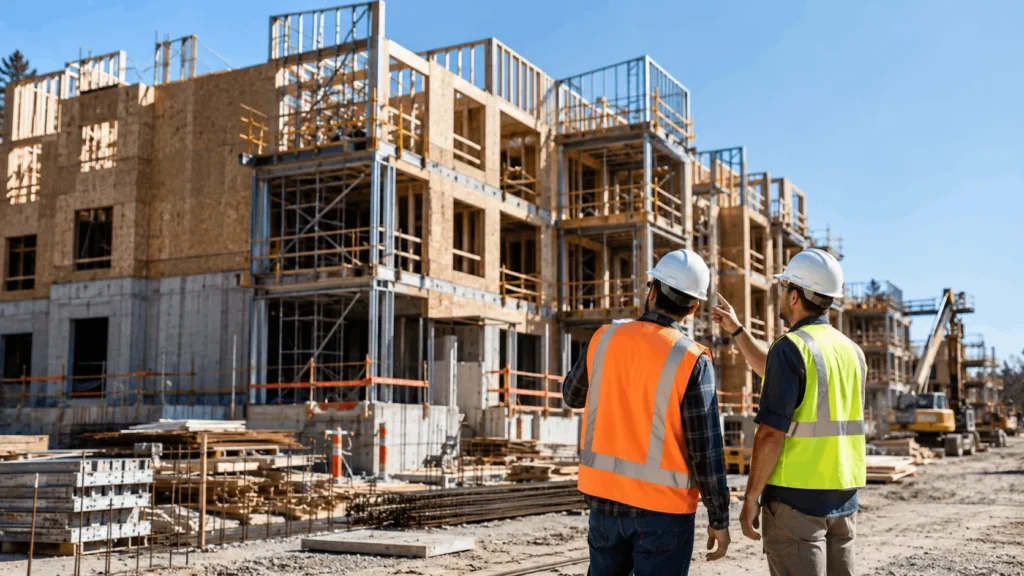
Recent development activity has extended into life sciences buildings and expanded student housing partnerships with large public universities, alongside its core apartment and mixed use construction work.
Recent Expansion Moves
A few moves over the past several years show where the company has been pushing beyond its core apartment business. In South America, it expanded into Brazil through a joint venture with CPP Investments and the developer Cyrela, aimed at building and operating purpose-built rental apartments in Sao Paulo.
On the life sciences side, a partnership with the CPP Investment Board backed a lab and office project in Somerville, Massachusetts, worth roughly 74 million dollars, part of a broader push into research and lab space rather than pure housing. In student housing specifically, the company committed around 600 million dollars toward new development in partnership with large public universities, including the University of Maryland at College Park and the University of Texas at Austin.
How Large the Company Has Grown
By headcount, the company reports close to 29,800 team members as of early 2026, spread across offices in North America, Europe, South America, and the Asia-Pacific region. It operates in roughly 250 markets in total, with a presence in all 50 states and larger concentrations in metro areas such as Dallas, Charlotte, Denver, and Miami, alongside major cities on both coasts.
Combined, Greystar Real Estate Partners manages and operates real estate valued at more than 300 billion dollars, including both properties it owns and properties it manages for others. That figure, together with the more than 1.1 million multifamily units and student beds under management, is what typically earns it the largest apartment operator label in industry rankings from groups like the National Multifamily Housing Council.
Careers at the Company
Job seekers interact with the company through openings across property management, investment management, development, and corporate support functions, posted on its own careers page and third party job boards Roles range from on-site leasing and maintenance positions at individual communities to corporate roles in acquisitions, asset management, and finance, based largely out of the Charleston headquarters and regional offices around the country.
Sustainability and Energy Management
The company has said it maintains an ongoing commitment to energy management and sustainable operating practices across the communities it manages, citing both cost control and long-term environmental impact as reasons behind it. Specific programs vary by property and region, since retrofit priorities differ between an older building and new construction.
What to Check Before Renting at a Greystar-Managed Community
Because the company operates thousands of individually branded communities rather than one uniform building, the ownership structure explained earlier actually changes how someone should research a specific property. Reviews, maintenance response times, and even lease terms can vary significantly from one community to the next, since local staff and the specific ownership arrangement drive daily operations more than the parent company name does.
Before signing, it helps to look up reviews for the exact property name and address rather than the parent company as a whole, confirm pet, parking, and application fee policies directly with that community’s leasing office since these are set locally, and ask whether the building is owned outright or managed on behalf of a separate institutional owner, since that can affect who ultimately approves larger repairs or renovation timelines
For most people, the practical takeaway is simple. If a lease, job posting, or investment offering mentions Greystar Real Estate Partners, it involves one of the largest and most diversified operators in rental housing rather than a small regional landlord, with a scope that now touches property management, investment management, and ground-up development under a single organization