
Whether you’re trying to make an offer on a vacant house, tracking down a landlord, resolving a boundary dispute, or simply curious about who owns the property next door, finding out who legally owns a piece of real estate is easier than most people expect. Property ownership records are public information in the United States, and there are several free and paid ways to access them.
This guide walks through the most reliable methods for finding a property owner, from free government databases to professional title searches, so you can pick the approach that fits your situation and budget.
Why You Might Need to Find a Property Owner
There are many legitimate reasons someone might search for property ownership information:
- Making an unsolicited offer on a vacant or distressed property
- Resolving a fence line, tree, or drainage dispute with a neighbor
- Verifying a seller’s identity before a real estate transaction
- Locating an absentee landlord for maintenance or lease issues
- Confirming ownership before submitting a permit or zoning request
- Conducting due diligence for an investment purchase
Since property ownership is recorded with local government agencies, this information is generally accessible to anyone, not just real estate professionals.
8 Ways to Find the Owner of a Property
1. Search the County Assessor’s Website
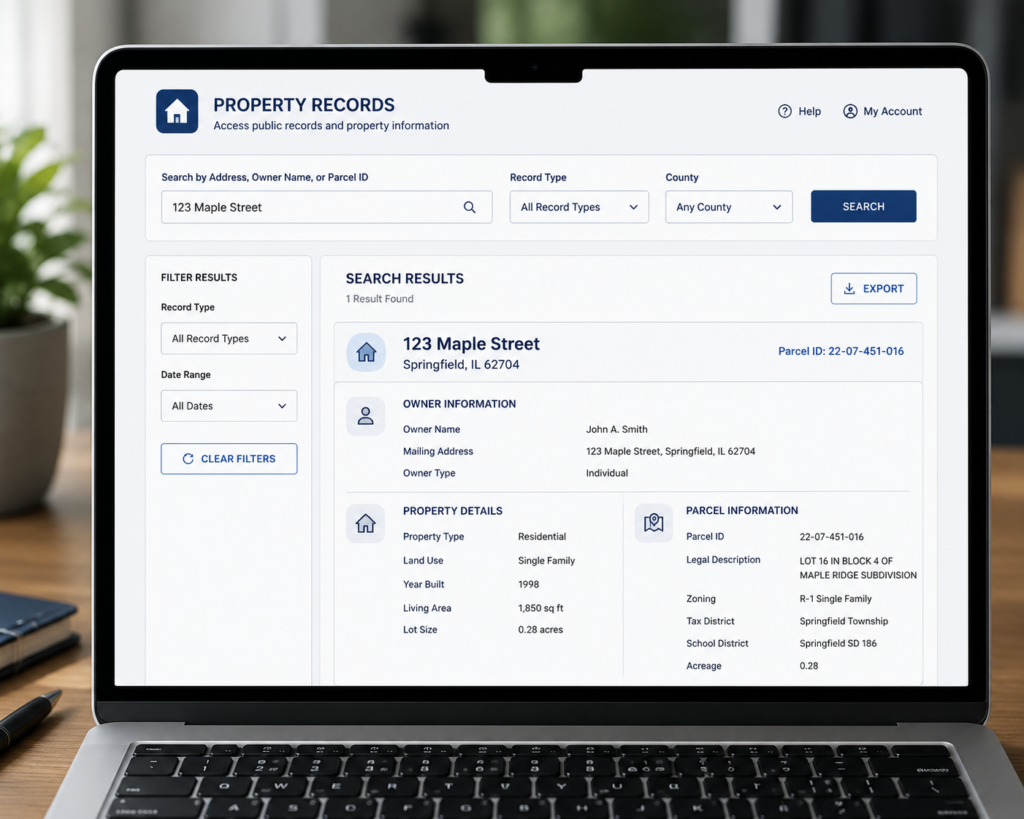
Every county in the U.S. has an assessor’s office (sometimes called the property appraiser) responsible for valuing property for tax purposes. Most counties now offer a free online portal where you can search by address and pull up:
- Owner’s name
- Mailing address
- Parcel number
- Assessed value
- Property tax history
To find it, search “[county name] assessor property search” in Google. This is usually the fastest and most reliable free method.
2. Check the County Recorder or Clerk’s Office
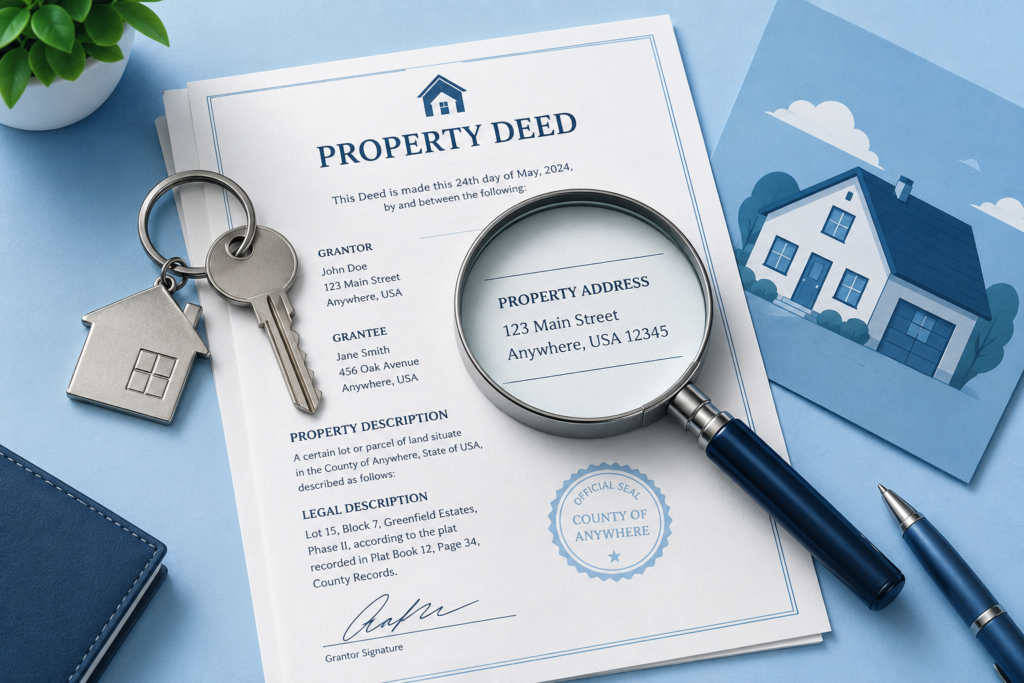
The county recorder (also called the register of deeds or county clerk, depending on the state) maintains the official record of every deed transfer. This office shows the full ownership history, not just the current owner, which is useful if you need to trace a chain of title or confirm how long someone has owned a property.
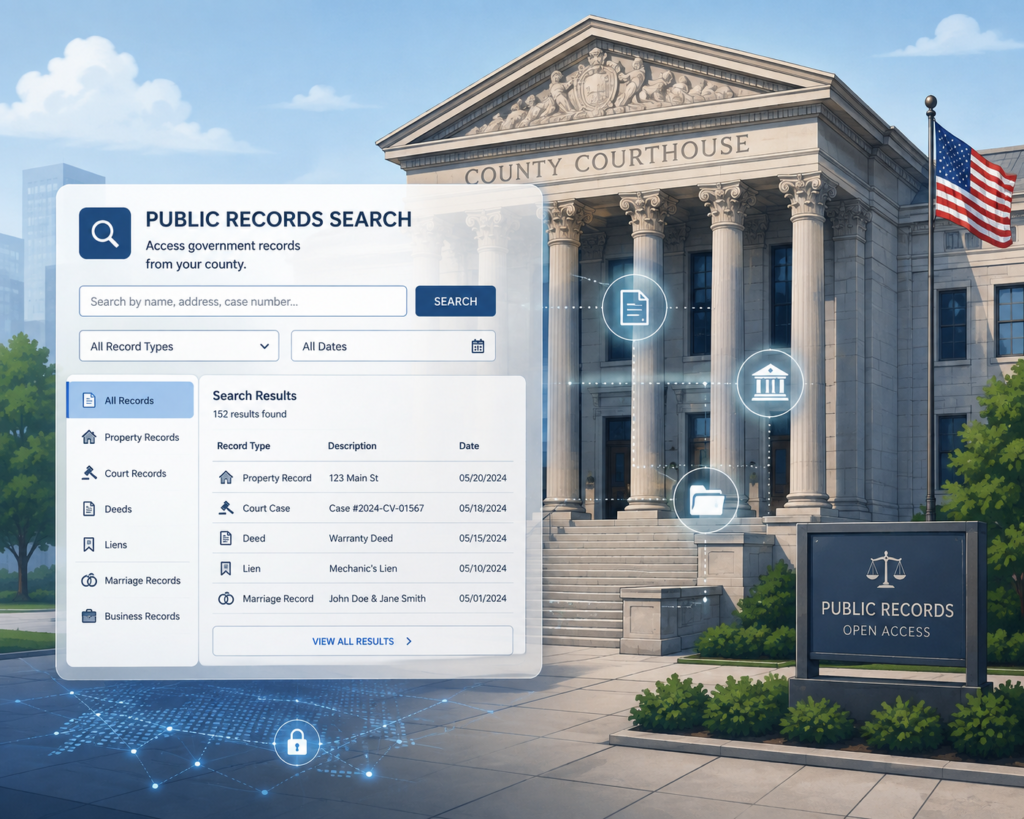
Many recorder offices now have searchable online deed indexes, though some rural counties still require an in-person or mailed request.
3. Use a Free Online Property Records Tool
Several websites aggregate public property data into a single searchable database. Options like Zillow, Realtor.com, PropertyShark, and county GIS mapping tools often display owner information, tax details, and property history for free, though coverage and accuracy vary by location.
These tools are a good starting point, but always cross-check with the county assessor for the most current legal owner of record, since third-party sites can lag behind recent sales.
4. Use Your County’s GIS Mapping System
Many counties maintain a Geographic Information System (GIS) map that lets you click directly on a parcel to view ownership details, lot dimensions, and zoning classification. This is especially useful when you don’t have an exact street address, such as for vacant land.
5. Ask a Local Title Company
Title companies research property ownership as part of every real estate closing, so they have fast access to accurate records. If you’re seriously considering purchasing a property, a title company can run a preliminary title search that confirms the current owner, any liens, and outstanding claims on the property.
Some title companies will do a basic ownership lookup for free or a small fee, especially if they hope to earn your future closing business.
6. Work With a Local Real Estate Agent
A licensed real estate agent has access to the Multiple Listing Service (MLS) and other professional databases that can quickly confirm ownership, prior sale prices, and listing history. This route is especially helpful if you’re planning to make an offer, since the agent can also help you contact the owner directly.

7. Try a Paid Property Records Service
If free tools don’t give you enough detail, paid services such as PropertyShark, TitleSearch.com, or Spokeo-style skip tracing tools can compile a fuller report, including owner contact information, mailing address, and sometimes phone numbers. These are commonly used by investors doing bulk searches across many properties at once.
Be cautious with any paid service that doesn’t clearly source its data from official public records, as accuracy can be inconsistent.
8. Check the Property Tax Bill or Mail
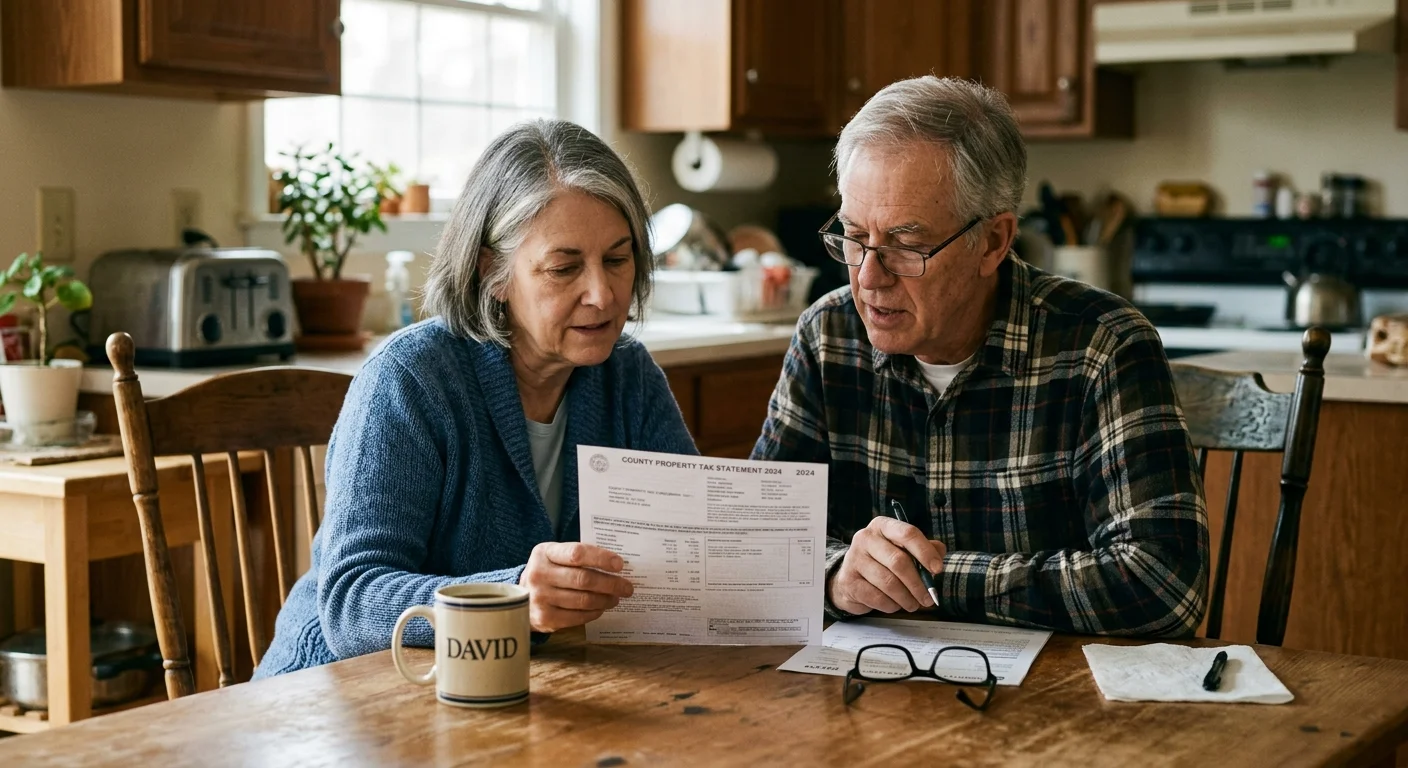
If you have physical access to the property, the mailbox, a posted tax notice, or even a “for sale by owner” sign can sometimes lead you straight to the owner’s name. Local tax collector websites also often let you search property tax bills by address, which typically list the billing owner’s name.
What Information You Can Expect to Find
Depending on the method you use, a property owner search can reveal:
- Legal owner’s name (individual, trust, or LLC)
- Mailing address (which may differ from the property address)
- Purchase date and sale price
- Assessed and market value
- Property tax status
- Liens, mortgages, or judgments attached to the property
Keep in mind that if a property is owned by a trust or LLC, the public record may only show the entity’s name rather than the individual behind it. In that case, you’d need to search the state’s business registry (usually the Secretary of State’s website) to find the registered agent or members associated with that entity.
Tips for a More Accurate Property Owner Search
- Use the parcel number when possible. Addresses can sometimes be mismatched across databases, but parcel numbers are unique and consistent.
- Cross-check multiple sources. Free aggregator sites are convenient but not always current; confirm with the county assessor or recorder.
- Watch for entity ownership. LLCs and trusts require an extra step through your state’s business filings.
- Respect privacy boundaries. Public records are meant for legitimate research, not harassment. Some states allow property owners to request that certain personal details be redacted from public view, particularly for law enforcement, judges, or domestic violence survivors.
When to Bring in a Professional
If you’re preparing to make a purchase offer, resolve a legal dispute, or need certainty for a transaction, it’s worth paying for a formal title search rather than relying solely on free tools. A title company or real estate attorney can confirm not just who owns the property, but whether the title is clear of liens, easements, or competing claims, information that free databases typically don’t capture.
Frequently Asked Questions
1. Is property ownership information public in the USA?
Yes. In nearly all U.S. counties, property ownership records are public and can be accessed through the county assessor or recorder’s office, either online or in person.
2. Can I find a property owner for free?
Yes. County assessor websites, GIS mapping tools, and tax collector sites usually provide owner names and mailing addresses at no cost.
3. How do I find the owner of a property held by an LLC?
Search your state’s Secretary of State business entity database using the LLC name listed on the property record to find the registered agent or listed members.
4. Why does the mailing address differ from the property address?
Owners often use a different mailing address, such as their primary residence, if the property in question is a rental, vacant lot, or investment property.
5. How accurate are third-party property record websites?
They’re generally useful as a starting point but can lag behind recent sales. Always confirm with the official county record before making decisions based on that information.