


Real estate marketing is the set of activities that make people aware of a property, an agent, or a brokerage. Its goal is to move those people toward a deal. That deal might be a sale, a lease, or a signed listing agreement. The meaning of real estate marketing is broader than most people expect. It covers the photos on a listing and the sign in the yard. It also covers the email a past client receives and the Google result a buyer finds at midnight. This guide explains what real estate marketing means, how it works, and how to tell whether it is working.
The meaning of Real Estate Marketing in Plain Terms
At its simplest, real estate marketing is how you get the right people to notice what you offer. Then it earns enough trust for them to act. What you offer depends on who you are. A listing agent markets a home to buyers. A buyer’s agent markets expertise to people who want to purchase. A brokerage markets its brand to both agents and clients. A developer markets a new community long before the first house is built.
Marketing is not the same as sales. Marketing creates the conversation. Sales closes it. A buyer who reads your neighborhood guide and follows you on Instagram is being marketed to. The sales conversation starts only when that buyer calls.
Why Real Estate Marketing Works Differently from Other Industries
A home is the largest purchase most people ever make. That changes how marketing behaves. Buyers research for months, compare agents, and ask friends for names. Sellers often interview several agents before choosing one. Trust matters more than a clever slogan.
Real estate is also local. A plan that works in a suburb of Phoenix can fail in a downtown Boston condo market. Buyers in each place search different terms, follow different people, and care about different features. Timing matters too. Spring listings face more competition, while winter buyers are often more serious.
The Two Audiences you Market to
Every real estate marketer serves two groups, and they need different messages. Property marketing speaks to buyers or renters. It focuses on the home, the street, the price, and the lifestyle. Personal brand marketing speaks to future clients, mostly sellers. It focuses on your track record, your process, and the results you deliver.
Most agents spend too much effort on the first group. A strong listing helps one sale. A strong reputation produces many.
Main Types of Real Estate Marketing
1: Digital Marketing
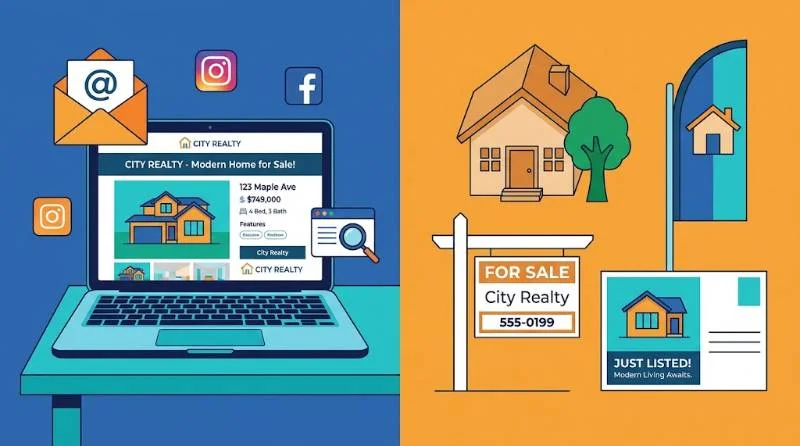
Digital marketing is now the first stop for most buyers. It includes your website, listing syndication to portals like Zillow and Realtor.com, social media, email, and paid ads. Search engine optimization helps buyers find you when they type a phrase like homes for sale in Austin. Short video tours on Instagram Reels and YouTube often hold attention better than static photos. A well-kept Google Business Profile with recent reviews can bring in local calls without ad spend.
2: Traditional Marketing
Print and physical tactics still work, especially locally. Yard signs, direct mail postcards, open houses, and printed flyers all belong here. A Just Listed postcard sent to nearby homeowners reaches people who may be quietly thinking about selling. Traditional methods cost more per contact, but they face less noise than a crowded inbox.
3: Content Marketing
Content marketing means publishing useful material before anyone asks for it. Neighborhood guides, market updates, first-time buyer checklists, and short videos fit well. The goal is to answer questions so well that readers remember your name. A town-specific market update does this better than a generic national blog post. Content builds slowly, but it keeps working long after you publish it.
4: Referral and Relationship Marketing
Many agents get most business from past clients and their circle. Staying in touch through calls, handwritten notes, and annual home anniversaries keeps you top of mind. It costs little and is hard for competitors to copy.
5: Visual and Listing Marketing
For a specific property, presentation decides whether buyers click. Professional photography, video walkthroughs, 3D tours, drone shots, and floor plans all help. Staging helps buyers picture themselves living there. Poor photos can make a good home easy to scroll past.
How Real Estate Marketing Works Step by Step
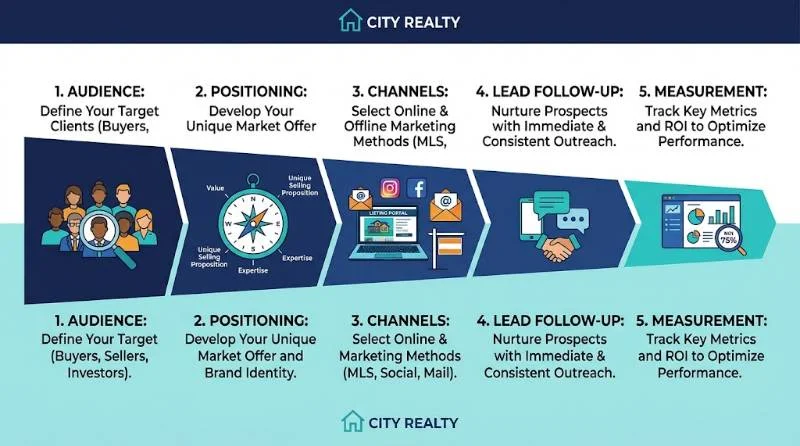
1: Define the Audience
Start with a specific person. A young couple searching for starter homes needs a different message than retirees downsizing. Write down their budget, their worries, and the websites they use. Vague targets such as everyone who wants a house produce vague results.
2: Position your Offer
Positioning is the reason someone should pick you or this property. An agent who specializes in condos for first-time buyers has a clear position. An agent who sells anything anywhere does not. The same applies to a listing: lead with its strongest feature, not a list of every feature.
3: Choose Channels and Set a Budget
Pick two or three channels you can run consistently rather than seven you will abandon. New agents often do well with a polished Google Business Profile, a social media presence, and a database of contacts. Established teams add paid search, direct mail, and video. Spend where your audience already looks.
4: Capture and Follow Up on Leads
Most leads are not ready on day one. A person who downloads a home value guide may sell in six months. A customer relationship management system, often called a CRM, tracks each contact and reminds you to follow up. Speed matters here. A fast reply to a new inquiry usually beats a slow, perfect one.
5: Measure and Adjust
Track what each channel produces. Useful numbers include leads per month, cost per lead, appointments set, and closed transactions. Cost per lead alone can mislead. A cheap lead that never answers the phone costs more than an expensive one who signs. Review results every quarter and cut what does not earn its place.
Real Estate Marketing Examples in Action
Concrete examples make the definition clearer.
A listing agent preparing a three-bedroom home hires a photographer, writes a story-driven description, and posts a short video tour. She sends a Just Listed mailer to the surrounding blocks and schedules an open house. All of that is property marketing.
Another agent posts a monthly market report for her town, answers buyer questions on Instagram, and mails birthday cards to past clients. That is personal brand marketing. Neither effort is about one specific home. Both aim to produce the next call.
A developer selling condos not yet built uses renderings, a sales center, and a waitlist. That is a third pattern: marketing before the product exists.
Common Real Estate Marketing Mistakes
Experienced agents repeat the same errors, and most are fixable.
Inconsistency is the biggest. Posting daily for two weeks and then vanishing for two months teaches the algorithm and your audience to ignore you. A modest schedule you keep beats an ambitious one you drop.
Another is talking about yourself. Buyers do not want a feed of your awards. They want help understanding prices, schools, commute times, and closing costs.
Poor photography is a third. A dark phone photo of a living room costs a seller real attention.
Ignoring compliance is the most serious. Advertising must follow the federal Fair Housing Act, so you cannot steer or exclude people through your wording or targeting. Brokerage rules also require clear display of your firm name and license details. Check with your broker before launching any campaign.
Real Estate Marketing vs. Real Estate Advertising
People use these terms as if they were identical, but they are not. Advertising is one tool inside marketing. It means paid promotion, such as a Facebook ad or a billboard. Marketing also includes research, pricing, positioning, content, events, and relationships that cost no ad spend. If you run ads without a clear audience or message, you are advertising without marketing.
How to Know if Your Real Estate Marketing is Working
Judge marketing by business outcomes, not by likes. A post with thousands of views and no inquiries has not done its job. Watch for these signals over a few months.
Website traffic that turns into calls or form fills shows your message fits the audience. Listings that draw showings in the first week suggest strong pricing and presentation. Referrals from past clients signal that your relationship marketing is landing. A falling cost per closed deal shows your spend is getting smarter.
Where a New Agent Should Start
If you have little money, begin with free assets. Set up a Google Business Profile and claim your profiles on Zillow and Realtor.com. Choose one social platform and post local content twice a week. Email everyone you know to announce your license and ask for introductions. Then add paid tools only after you know which free efforts bring replies.
This advice changes in a hot market. When inventory is tight, buyers care more about access to new listings than about your brand story. In a slow market, strong marketing separates the homes that sell from the ones that sit.
Tools Commonly Used in Real Estate Marketing
A few tools appear in almost every modern workflow. The MLS feeds listings to major portals and is where agents reach other agents. A CRM such as Follow Up Boss or LionDesk stores contacts and automates reminders. Canva handles quick graphics, while Mailchimp or similar platforms send newsletters. Meta Ads and Google Ads handle paid reach, and a scheduling tool keeps social posts consistent. Pick tools you will actually open each week.

Putting the Meaning to Work
Real estate marketing means attracting, informing, and building trust with people who may buy, sell, or rent. It applies to a single listing and to a long-term reputation. Begin by choosing your audience, then pick a few channels and follow up consistently. Measure results, adjust, and keep the message honest. Do that well, and marketing becomes the steady source of your next client rather than a guess.