
![Laptop showing a real estate asset management software dashboard with portfolio performance charts H2: What Is Real Estate Asset Management Software Real estate asset management software is a platform built to track the financial and operational performance of properties across an entire portfolio. Instead of pulling numbers from separate rent rolls, accounting exports, and appraisal reports, the software aggregates that data into one place. From there, it generates the metrics asset managers rely on daily. That includes net operating income, occupancy, cap rate, and internal rate of return, updated automatically as new data comes in. The goal isn't just storage. A good platform turns raw property data into decisions. It flags underperforming assets and surfaces lease expirations before they become a problem. It also gives teams a consistent way to report to investors or ownership. H2: Real Estate Asset Management vs. Property Management vs. Portfolio Management Software These three terms get used interchangeably, but they solve different problems, and picking the wrong category is a common early mistake. H3: Property management software Property management software handles the day to day operations of a single building or a small set of properties. Think maintenance requests, tenant communication, and rent collection. It's built for property managers on site, not for someone evaluating a portfolio's financial performance. H3: Portfolio management software Portfolio management software sits a level higher. It looks across many properties or funds at once. The focus is allocation, diversification, and aggregate returns, rather than the operational details of any single asset. H3: Real estate asset management software Real estate asset management software sits between the two. It cares about the financial and strategic performance of individual assets, but it also rolls that data up into portfolio-level reporting. Many platforms in this category now blend elements of all three. That overlap is part of why the naming gets confusing once you start comparing vendors. H2: Who Uses Real Estate Asset Management Software Asset managers overseeing commercial, multifamily, or industrial portfolios are the core users, but the category serves several related roles. Institutional investors and pension funds use it to track performance across large, geographically spread holdings. Family offices rely on it to consolidate real estate alongside other investments without hiring a full analytics team. Private equity real estate firms use it to monitor fund performance and prepare investor reporting on a predictable schedule. Publicly traded REITs use similar tools to standardize disclosures across regulatory filings and quarterly investor updates. Corporate real estate teams use a related toolset to manage owned and leased facilities as operating costs rather than investments. The common thread across all of these users is the same problem. Property data lives in too many disconnected systems to make fast, confident decisions. H2: Core Features to Look For Most platforms in this category share a similar feature set, though the depth varies quite a bit between vendors. Portfolio and asset tracking that consolidates property details, ownership structure, and unit-level data in one place. Automated financial reporting that pulls net operating income, cash flow, and variance reports without manual spreadsheet work. Lease and rent roll management that tracks lease terms, escalations, and renewal dates across every property. Budgeting and forecasting tools that let teams model different scenarios before committing capital. Customizable dashboards that surface the key performance indicators each stakeholder actually cares about. Document management for leases, appraisals, and inspection reports tied directly to the relevant property. Integration or API access that connects the platform to existing accounting systems, such as Yardi or MRI. This keeps data from being entered twice. Not every portfolio needs every feature on this list. A smaller investor managing a handful of properties may only need solid reporting and rent roll tracking. An institutional fund, by contrast, will lean heavily on integrations and forecasting. Image needed, prompt is here: [A photo-realistic close-up of a computer monitor displaying a real estate asset management software interface with KPI cards for net operating income, occupancy rate, and cap rate, alongside a portfolio map view, clean modern office setting, 16:9 aspect ratio] Image Title: Real Estate Asset Management Software KPI Dashboard Alt Text: Real estate asset management software dashboard showing NOI, occupancy, and cap rate metrics H2: Key Benefits of Using Real Estate Asset Management Software The most immediate benefit is time. Teams that used to spend days each month compiling reports from scattered spreadsheets can generate the same reports in minutes. That happens once the underlying data is centralized in one platform. Beyond speed, the software improves the quality of decisions. When NOI, occupancy, and lease data sit in one dashboard instead of five separate files, patterns emerge fast. Trends that used to go unnoticed become obvious within minutes. A portfolio manager can spot an underperforming property or an upcoming lease cliff weeks earlier than a manual review would catch it. It also standardizes reporting across a portfolio. This matters most when properties were acquired at different times, from different sellers, each with their own record-keeping habits. Consistent reporting makes it far easier to compare assets against each other and against the broader portfolio. Finally, it strengthens communication with investors and ownership. Automated, consistent reports build trust in a way that ad hoc spreadsheets never quite manage. H2: How to Choose the Right Real Estate Asset Management Software Start with scalability. A platform that works fine for ten properties can struggle once a portfolio grows past a hundred. Ask vendors directly how their system performs at your target size, not just your current one. Check integrations next. If your accounting, leasing, or CRM systems can't connect to the new platform, someone ends up re-entering data by hand. That defeats the purpose of adopting the software in the first place. Look closely at reporting flexibility. Every portfolio tracks slightly different metrics. A platform with only rigid, pre-built reports will eventually force your team to work around the tool instead of with it. Security and compliance matter more than most buyers expect going in. Ask about data encryption and access controls. Also ask whether the vendor holds a SOC 2 report, especially if you manage capital on behalf of institutional investors. Finally, weigh ease of use and onboarding support. A powerful platform that your team avoids because it's hard to use delivers less value than a simpler one people actually adopt. Image needed, prompt is here: [A photo-realistic image of a small team of professionals in business casual attire gathered around a conference table reviewing a printed checklist and a laptop showing software comparison charts, bright modern office, 16:9 aspect ratio] Image Title: Choosing Real Estate Asset Management Software as a Team Alt Text: Team evaluating real estate asset management software options around a conference table H2: Common Implementation Challenges Migrating historical data from spreadsheets is usually the biggest early hurdle. Years of inconsistent formatting rarely map cleanly into a new system. Budget real time for cleanup rather than assuming a quick import will handle it. Adoption is the second challenge, and it's often underestimated. A platform only pays off once the whole team uses it consistently instead of falling back on the spreadsheets they're used to. Naming an internal champion who can answer questions and enforce consistent data entry makes a measurable difference here. Integration friction shows up when accounting or leasing systems weren't part of the original evaluation. Confirm compatibility before signing a contract, not after, since retrofitting integrations later is far more expensive than checking upfront. H2: How Long Does Implementation Typically Take Implementation timelines vary by portfolio size and how much historical data needs to move into the new system. A small portfolio with clean records might get a platform mostly operational within a few weeks. A large institutional portfolio with fragmented, decades-old records takes longer. Realistically, expect two to four months to fully migrate, configure, and validate the system before the team relies on it for reporting. Vendors sometimes quote faster timelines than what actually plays out once data cleanup and integration testing get factored in. Ask for a realistic timeline based on portfolios similar in size to yours, not the best-case scenario used in a sales pitch. H2: How AI Is Changing Real Estate Asset Management Software The biggest shift in this category over the past few years has been automation around unstructured data. Lease abstraction tools can now pull key terms directly from PDF leases instead of a person reading and entering them by hand. That includes start dates, escalations, and renewal options. Forecasting has also improved. Instead of static spreadsheet models, some platforms now run scenario analysis using live portfolio data. Projections update automatically as new information comes in. This doesn't replace the judgment of an experienced asset manager. It does remove a lot of the manual work that used to eat up their week. Image needed, prompt is here: [A photo-realistic illustration of a document being scanned and converted into structured data on a screen, showing lease clauses transforming into organized table rows with icons representing dates and dollar amounts, cool blue tech-forward lighting, 16:9 aspect ratio] Image Title: AI Lease Abstraction in Real Estate Asset Management Software Alt Text: AI-powered lease abstraction feature inside real estate asset management software H2: Typical Pricing Models Pricing in this category varies more than most software niches. Portfolio size affects both the value delivered and the underlying data volume a platform has to handle. Smaller platforms often charge a flat monthly fee per user, which works well for individual investors or small teams. Mid-sized platforms frequently price per property or per unit, scaling naturally as a portfolio grows. Larger institutional platforms tend to move to custom, quote-based pricing tied to assets under management. Implementation and support fees often aren't visible in a public price list. Whatever the model, ask for a breakdown that separates the base subscription from implementation and integrations. Per-report or per-user add-ons can shift the real cost significantly once a contract is signed. Choosing a platform ultimately comes down to matching the software's depth to how your portfolio operates today. Build around the portfolio you have now, not the one you might have in five years. Start with the features your team uses weekly and confirm the integrations that matter most. Treat everything else as a bonus rather than a requirement.](https://estatewiser.net/wp-content/uploads/2026/08/Real-Estate-Asset-Management-Software-Portfolio-Dashboard-1024x572.webp)

Real estate asset management software centralizes the property, financial, and lease data that asset managers used to track across dozens of spreadsheets. It replaces manual reporting with automated dashboards. It also standardizes how a portfolio’s performance gets measured, giving investors and stakeholders a single source of truth. This guide breaks down what the category actually includes and the features worth prioritizing. It also covers how to choose a platform that fits your portfolio, rather than the other way around.
What Is Real Estate Asset Management Software
Real estate asset management software is a platform built to track the financial and operational performance of properties across an entire portfolio. Instead of pulling numbers from separate rent rolls, accounting exports, and appraisal reports, the software aggregates that data into one place. From there, it generates the metrics asset managers rely on daily. That includes net operating income, occupancy, cap rate, and internal rate of return, updated automatically as new data comes in.
The goal isn’t just storage. A good platform turns raw property data into decisions. It flags underperforming assets and surfaces lease expirations before they become a problem. It also gives teams a consistent way to report to investors or ownership.
Real Estate Asset Management vs. Property Management vs. Portfolio Management Software
These three terms get used interchangeably, but they solve different problems, and picking the wrong category is a common early mistake.
Property management software
Property management software handles the day to day operations of a single building or a small set of properties. Think maintenance requests, tenant communication, and rent collection. It’s built for property managers on site, not for someone evaluating a portfolio’s financial performance.
Portfolio management software
Portfolio management software sits a level higher. It looks across many properties or funds at once. The focus is allocation, diversification, and aggregate returns, rather than the operational details of any single asset.
Real estate asset management software
Real estate asset management software sits between the two. It cares about the financial and strategic performance of individual assets, but it also rolls that data up into portfolio-level reporting. Many platforms in this category now blend elements of all three. That overlap is part of why the naming gets confusing once you start comparing vendors.
Who Uses Real Estate Asset Management Software
Asset managers overseeing commercial, multifamily, or industrial portfolios are the core users, but the category serves several related roles. Institutional investors and pension funds use it to track performance across large, geographically spread holdings. Family offices rely on it to consolidate real estate alongside other investments without hiring a full analytics team. Private equity real estate firms use it to monitor fund performance and prepare investor reporting on a predictable schedule. Publicly traded REITs use similar tools to standardize disclosures across regulatory filings and quarterly investor updates. Corporate real estate teams use a related toolset to manage owned and leased facilities as operating costs rather than investments.
The common thread across all of these users is the same problem. Property data lives in too many disconnected systems to make fast, confident decisions.
Core Features to Look For
Most platforms in this category share a similar feature set, though the depth varies quite a bit between vendors.
Portfolio and asset tracking that consolidates property details, ownership structure, and unit-level data in one place. Automated financial reporting that pulls net operating income, cash flow, and variance reports without manual spreadsheet work. Lease and rent roll management that tracks lease terms, escalations, and renewal dates across every property. Budgeting and forecasting tools that let teams model different scenarios before committing capital. Customizable dashboards that surface the key performance indicators each stakeholder actually cares about. Document management for leases, appraisals, and inspection reports tied directly to the relevant property. Integration or API access that connects the platform to existing accounting systems, such as Yardi or MRI. This keeps data from being entered twice.
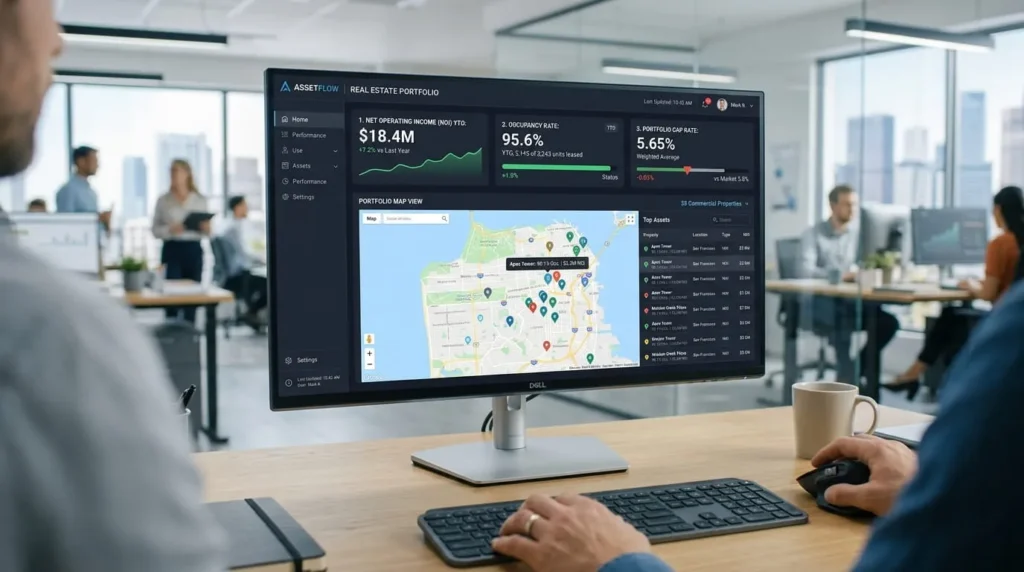
Not every portfolio needs every feature on this list. A smaller investor managing a handful of properties may only need solid reporting and rent roll tracking. An institutional fund, by contrast, will lean heavily on integrations and forecasting.
Key Benefits of Using Real Estate Asset Management Software
The most immediate benefit is time. Teams that used to spend days each month compiling reports from scattered spreadsheets can generate the same reports in minutes. That happens once the underlying data is centralized in one platform.
Beyond speed, the software improves the quality of decisions. When NOI, occupancy, and lease data sit in one dashboard instead of five separate files, patterns emerge fast. Trends that used to go unnoticed become obvious within minutes. A portfolio manager can spot an underperforming property or an upcoming lease cliff weeks earlier than a manual review would catch it.
It also standardizes reporting across a portfolio. This matters most when properties were acquired at different times, from different sellers, each with their own record-keeping habits. Consistent reporting makes it far easier to compare assets against each other and against the broader portfolio.
Finally, it strengthens communication with investors and ownership. Automated, consistent reports build trust in a way that ad hoc spreadsheets never quite manage.
How to Choose the Right Real Estate Asset Management Software
Start with scalability. A platform that works fine for ten properties can struggle once a portfolio grows past a hundred. Ask vendors directly how their system performs at your target size, not just your current one.
Check integrations next. If your accounting, leasing, or CRM systems can’t connect to the new platform, someone ends up re-entering data by hand. That defeats the purpose of adopting the software in the first place.
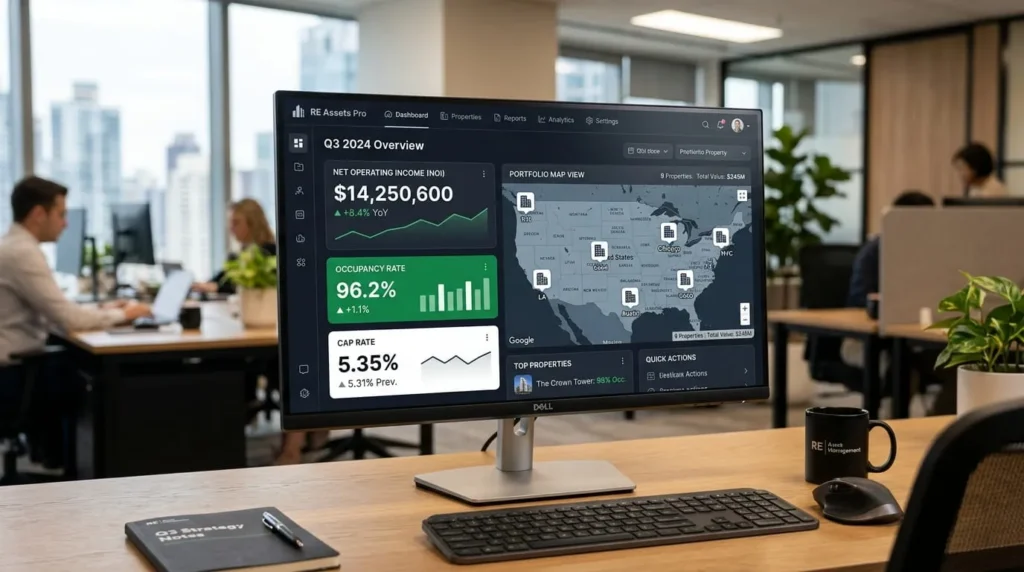
Look closely at reporting flexibility. Every portfolio tracks slightly different metrics. A platform with only rigid, pre-built reports will eventually force your team to work around the tool instead of with it.
Security and compliance matter more than most buyers expect going in. Ask about data encryption and access controls. Also ask whether the vendor holds a SOC 2 report, especially if you manage capital on behalf of institutional investors.
Finally, weigh ease of use and onboarding support. A powerful platform that your team avoids because it’s hard to use delivers less value than a simpler one people actually adopt.
Common Implementation Challenges
Migrating historical data from spreadsheets is usually the biggest early hurdle. Years of inconsistent formatting rarely map cleanly into a new system. Budget real time for cleanup rather than assuming a quick import will handle it.
Adoption is the second challenge, and it’s often underestimated. A platform only pays off once the whole team uses it consistently instead of falling back on the spreadsheets they’re used to. Naming an internal champion who can answer questions and enforce consistent data entry makes a measurable difference here.
Integration friction shows up when accounting or leasing systems weren’t part of the original evaluation. Confirm compatibility before signing a contract, not after, since retrofitting integrations later is far more expensive than checking upfront.
How Long Does Implementation Typically Take
Implementation timelines vary by portfolio size and how much historical data needs to move into the new system. A small portfolio with clean records might get a platform mostly operational within a few weeks.
A large institutional portfolio with fragmented, decades-old records takes longer. Realistically, expect two to four months to fully migrate, configure, and validate the system before the team relies on it for reporting.
Vendors sometimes quote faster timelines than what actually plays out once data cleanup and integration testing get factored in. Ask for a realistic timeline based on portfolios similar in size to yours, not the best-case scenario used in a sales pitch.
How AI Is Changing Real Estate Asset Management Software
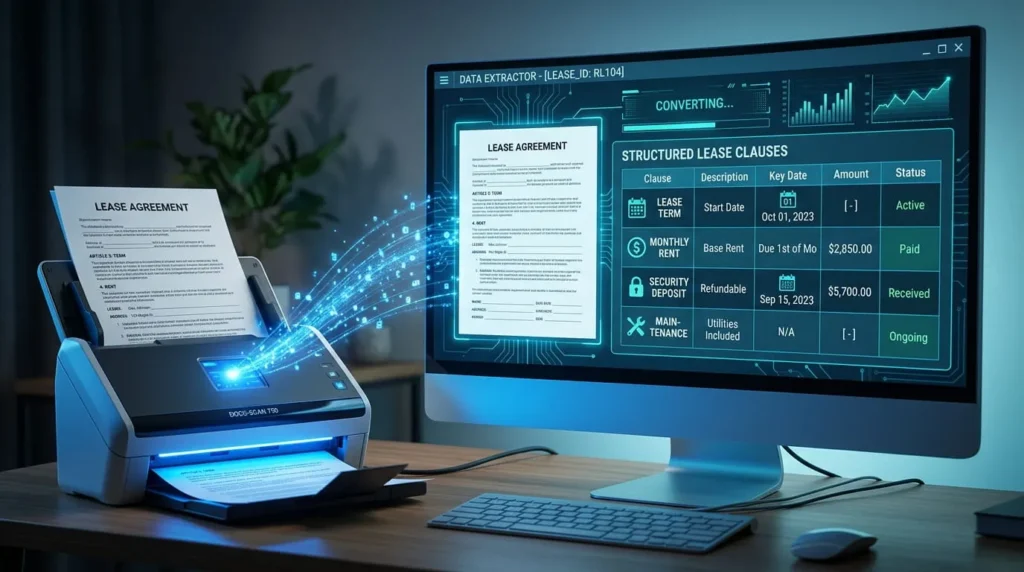
The biggest shift in this category over the past few years has been automation around unstructured data. Lease abstraction tools can now pull key terms directly from PDF leases instead of a person reading and entering them by hand. That includes start dates, escalations, and renewal options.
Forecasting has also improved. Instead of static spreadsheet models, some platforms now run scenario analysis using live portfolio data. Projections update automatically as new information comes in. This doesn’t replace the judgment of an experienced asset manager. It does remove a lot of the manual work that used to eat up their week.
Typical Pricing Models
Pricing in this category varies more than most software niches. Portfolio size affects both the value delivered and the underlying data volume a platform has to handle. Smaller platforms often charge a flat monthly fee per user, which works well for individual investors or small teams. Mid-sized platforms frequently price per property or per unit, scaling naturally as a portfolio grows. Larger institutional platforms tend to move to custom, quote-based pricing tied to assets under management. Implementation and support fees often aren’t visible in a public price list.
Whatever the model, ask for a breakdown that separates the base subscription from implementation and integrations. Per-report or per-user add-ons can shift the real cost significantly once a contract is signed.
Choosing a platform ultimately comes down to matching the software’s depth to how your portfolio operates today. Build around the portfolio you have now, not the one you might have in five years. Start with the features your team uses weekly and confirm the integrations that matter most. Treat everything else as a bonus rather than a requirement.