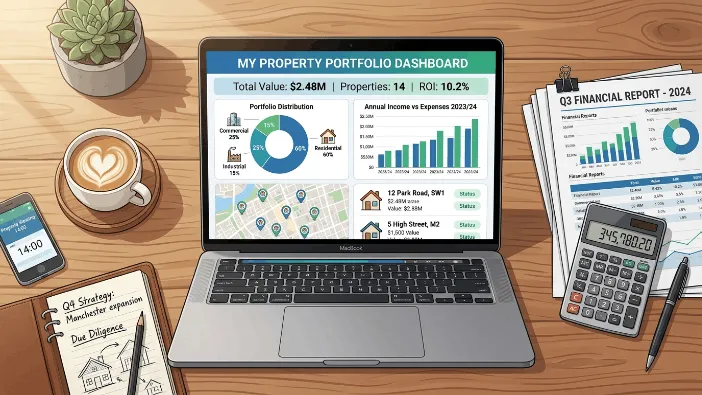

Real estate investors handle money differently than most small businesses. Rent lands on different days from different tenants. Mortgage payments split between interest and principal. Security deposits sit as liabilities, not income. And every dollar needs to trace back to a specific property by tax season. General accounting tools were not built around that structure. The best accounting software for real estate investors solves this by tracking income and expenses at the property level. It maps transactions to Schedule E categories automatically and calculates depreciation without a spreadsheet. Which platform fits you depends on your unit count and entity structure. It also depends on how hands-on you want to be with the books.
Why General Accounting Tools Fall Short for Real Estate Investors
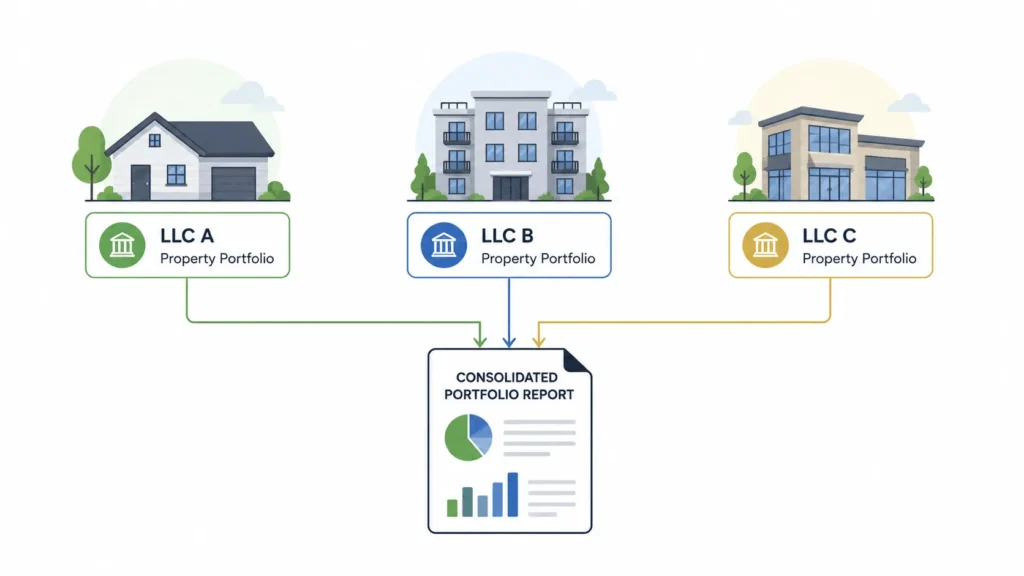
QuickBooks and Xero were built for businesses selling one product line. A real estate portfolio is different. Every property behaves like its own small business, with its own income, expenses, and profitability. You can force property-level visibility using classes, tags, or locations. But that setup takes real configuration work. And it breaks down once a portfolio crosses a handful of doors. Investors who hold each property in a separate LLC face a second problem. Every LLC needs its own set of books. Someone then has to combine them by hand into one portfolio view before a lender or CPA can use it. Purpose-built real estate accounting software solves both issues from the start. It ties income and expenses to a property automatically. It keeps a running depreciation schedule. And in stronger platforms, it consolidates multiple entities into one report without a manual export-and-merge routine.
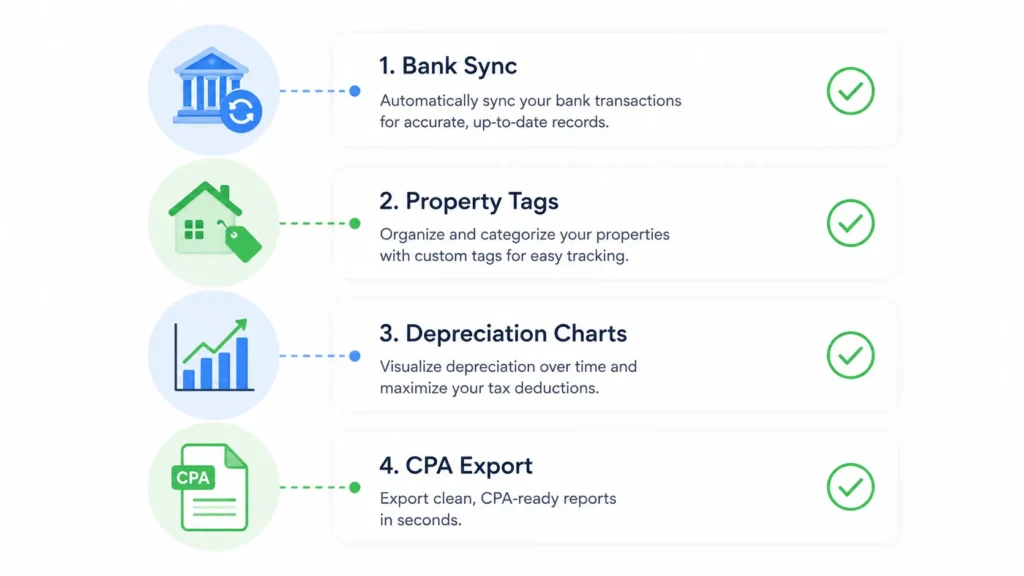
What to Look for in Real Estate Accounting Software
A handful of features separate software that helps from software you fight with every month.
- Property-level profit and loss, not just categories inside one big ledger
- Automatic Schedule E mapping, so tax prep does not start from a blank template
- Depreciation tracking that accounts for land value versus building value
- Bank and credit card feeds that import and categorize transactions on their own
- Support for multiple entities if you hold properties in separate LLCs
- Export options your CPA can actually use, whether that means CSV, PDF, or direct accountant access
Everything else matters less for accounting itself. Mobile apps, rent collection, and tenant portals help with property management. Do not let a polished interface distract from whether the platform gets these fundamentals right.
Best Accounting Software for Real Estate Investors in 2026
Portfolio size and complexity should drive your shortlist more than reviews or rankings. Here is how the main options stack up.
| Software | Best For | Starting Price | Multi-Entity Support |
| Stessa | Investors under 10 units | Free | Limited |
| Baselane | Landlords who want banking built in | Free | Limited |
| REI Hub | CPA-ready books and Schedule E | Paid, roughly $15 to $30 a month | Yes |
| Landlord Studio | Mobile-first landlords | Free tier, Pro from about $12 a month | No |
| QuickBooks Online | Investors already working with a QuickBooks CPA | Paid, starting around $35 a month | With setup |
| Buildium | Larger portfolios and property managers | Paid, priced by unit count | Yes |
| AppFolio | Syndicators and institutional portfolios | Custom quote, minimum portfolio applies | Yes |
Best Accounting Software by Investor Type
Your best option changes as your portfolio changes. Here is how to think about it at each stage.
Solo Landlords and Portfolios Under 10 Units
Stessa and Baselane both work well here. Rent tracking, expense categorization, and tax-ready reports come free out of the box. Stessa’s dashboard gives a clean read on cash flow and equity per property. Its Schedule E export saves your CPA from rebuilding your numbers every spring. Baselane adds a banking layer on top of the same accounting core. It offers virtual cards and separate accounts for security deposits, which matters since deposits are liabilities, not income. Landlord Studio is a solid alternative if mileage tracking and mobile receipt capture matter more to you than free banking.
Growing Portfolios (10 to 50 Units)
Free tools tend to hit a reporting ceiling once a portfolio crosses ten units. This is where REI Hub earns its reputation among CPAs. It runs on double-entry accounting and maps every transaction to Schedule E categories. It also tracks depreciation without a separate spreadsheet. Handing books to an accountant at year-end takes minutes instead of days. If you manage tenants directly, rather than through a management company, Buildium is worth a look. It pairs that same accounting depth with lease tracking and maintenance requests. The tradeoff is higher cost and a steeper learning curve than free tools built for a handful of properties.
Syndicators, Funds, and Multi-Entity Portfolios
Investors running deals with limited partners face a different problem. Capital accounts, distribution waterfalls, and K-1 preparation span several LLCs at once. REI Hub and AppFolio both support multi-entity structures. AppFolio goes further with built-in waterfall logic for preferred returns and carried interest. It also includes an investor portal, so partners can check their own capital account without emailing you. That level of automation carries institutional pricing and real setup time. It rarely makes sense below a certain portfolio size. A common middle path is QuickBooks, customized with a real estate chart of accounts and class tracking per property. Pair it with a bookkeeper who understands partnership accounting. It costs less upfront but shifts more specialized work onto a person.
Short-Term Rental Operators
Airbnb and VRBO payouts complicate the books. A single deposit often bundles nightly revenue, cleaning fees, and platform commissions into one number. Software that separates these automatically saves real time as transaction volume grows. Baselane and Stessa both handle STR categorization reasonably well for smaller operations. Investors running several short-term units alongside long-term rentals need a platform flexible enough to separate the two revenue types cleanly. Occupancy tax treatment and depreciation schedules can differ between them, so that separation matters at tax time.
Does QuickBooks Still Work for Real Estate Investors?
QuickBooks Online is not built specifically for property accounting. That shows the moment you try to run a clean profit and loss statement by property without setup work. Still, it remains a reasonable choice if your CPA already works in QuickBooks and your portfolio is small. Setup matters more than the software itself here. Build a real estate specific chart of accounts. Separate mortgage interest from principal. Split repairs from capital improvements. Tag every transaction to its property from your very first entry. Skip that step and you will pay for it later, in CPA cleanup fees or guesswork about which property is profitable. Investors past roughly 15 to 20 units usually find purpose-built software cheaper once cleanup time gets factored in.
Setting Up Your Books the Right Way
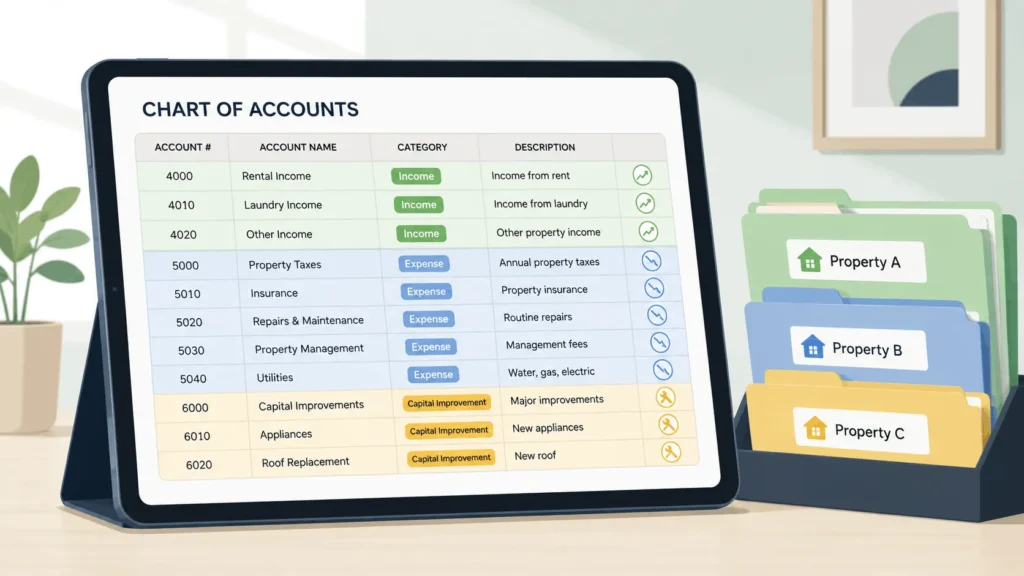
The software you choose matters less than how you configure it in month one. Start with a chart of accounts built around real estate categories. Include rental income, late fees, mortgage interest, property taxes, insurance, repairs, and capital improvements, kept separate from ordinary maintenance. Tag every property from day one, using classes, tags, or a dedicated property field, whichever your platform supports. Reconstructing that history later is slow and expensive. Connect bank and credit card accounts used only for the business. Mixing personal and rental spending creates both an audit risk and a bookkeeping headache. Decide early whether you are tracking on a cash or accrual basis, and stay consistent. Switching mid-year complicates both your reporting and your tax return.