


A real estate pre-licensing course is the state required education you complete before you are eligible to sit for your real estate license exam, and the required hours run anywhere from 60 to 180 depending on the state you are licensing in. It is not the same as post-licensing or continuing education, both of which come later, after you already hold a license. This guide covers what the course includes, how long it takes, what it costs, and the steps that come after you finish .This is separate from a real estate degree, which is a college credential, not a state licensing requirement.
What a Pre-Licensing Course Actually Is
A pre-licensing course is the education requirement set by your state’s real estate commission, completed before you ever apply for a license or sit for the exam. It covers the legal and practical foundation of the business: property law, contracts, agency relationships, and fair housing rules.
Post-licensing is a separate requirement in some states, completed after you already hold an active license, usually within your first renewal period. Continuing education is different again, an ongoing requirement every renewal cycle for as long as you keep the license active. Mixing these three up is the most common early mistake, since a course that satisfies one requirement will not automatically satisfy another.
The course exists because a real estate license authorizes someone to handle client money and legal paperwork in what is often the largest financial decision that client will ever make, so every state requires proof of baseline competence before granting that authority. That is worth keeping in mind when the material feels dry or overly legal, since exam questions tend to test judgment in specific scenarios rather than pure memorization.
Hours Required Vary Sharply by State
There is no single national hour requirement, so the first real step is confirming the number your specific state commission requires. The differences are large enough to change how someone should plan their schedule.
| State | Pre-Licensing Hours Required | Governing Body |
| Texas | 180 hours (six 30-hour courses) | Texas Real Estate Commission (TREC) |
| California | 135 hours (three 45-hour courses) | California Department of Real Estate (DRE) |
| Colorado | 168 hours | Colorado Real Estate Commission |
| South Carolina | 90 hours (two units) | South Carolina Real Estate Commission |
| North Carolina | 75 hours | North Carolina Real Estate Commission |
| Virginia | 60 hours | Virginia Real Estate Board |
Choosing a Delivery Format That Matches How You Study
Most providers offer the same course in several formats, and picking the wrong one is a common reason students fall behind. The material is identical either way, so the choice comes down to schedule and learning style, not content quality.
Self-Paced Online Courses
Self-paced online courses let a student log in whenever they have time and move through modules on their own schedule, which suits anyone working a full-time job around the coursework. Some states set a minimum number of days a course must remain open before the final exam can be scheduled, so self-paced does not always mean instant.
Live Online and Classroom Options

Live online classes run on a set schedule with an instructor present, and in-person classroom courses add a physical commute but give direct access to an instructor in real time. Both suit someone who learns better with a fixed routine and immediate answers to questions, rather than working through the material entirely alone.
What the Course Content Actually Includes
Every state’s course covers a similar core, even though the exact hour split differs. Real estate law and principles, contracts and agency relationships, fair housing law, financing and appraisal basics, and closing and settlement math make up the bulk of the material.
Trust account handling and recordkeeping usually get dedicated hours as well, since mishandling client funds is one of the more common causes of disciplinary action against new licensees. A handful of states also require a distinct ethics or current-issues module that gets refreshed as regulations change.
Settlement and closing math gets its own attention in most courses too, covering prorations, commission splits, and loan calculations that show up directly on the state exam. Students who have not done this kind of math in a while often spend more time here than anywhere else in the course.
The Proctored Final Exam
This proctored course exam is different from a practice exam for the actual state licensing test. Most states require the course’s final exam to be proctored, meaning a third party monitors the test to confirm the student is completing it without outside help. This is separate from the actual state licensing exam that comes later.
Scheduling a proctoring session often needs to happen one to two weeks in advance, and sessions can fill up close to a course access deadline, so waiting until the last week of a course window to schedule one is a common way students lose time they cannot get back.
What Happens After You Finish the Course
Finishing the pre-licensing course is the middle of the process, not the end of it. The remaining steps follow roughly the same order regardless of state, though exact names and fees vary.
Registering for the actual state licensing exam comes first, scheduled through an approved testing provider named by the state commission. Fingerprinting and a background check typically follow or run in parallel, since most commissions require both before issuing a license. After passing the state exam, a formal license application goes to the state commission along with any remaining fees.
The final step is finding a sponsoring broker, since in most states a new license is issued in an inactive status until a licensed broker agrees to sponsor it. Only after that sponsorship is on file can a new agent legally represent a client in a transaction.
A criminal record does not automatically block someone from getting licensed, but it can complicate the process. Many state commissions allow an early fitness determination request before the education even begins, so a past conviction, unpaid judgment, or professional discipline can be reviewed ahead of time instead of surfacing as a surprise after months of coursework are already paid for.
How Much Time and Money to Budget
Completing the education requirement takes most students two to six months, though a highly motivated student with a flexible schedule can sometimes finish in eight weeks or less. The math is simple once the required hours are known: a 180-hour requirement completed at roughly ten hours a week runs about eighteen weeks, while a 60-hour requirement at the same pace takes six.
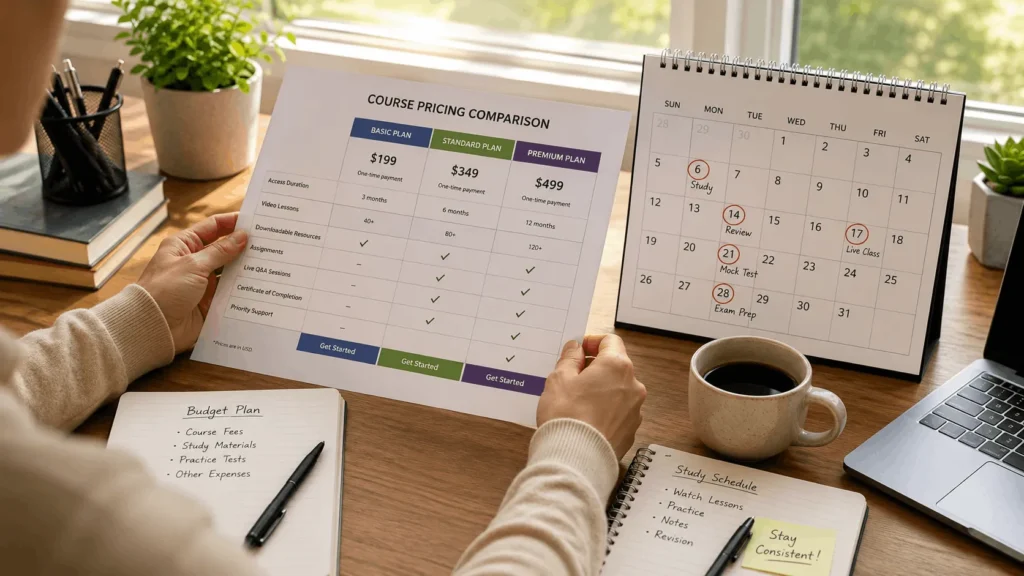
Course pricing for the required hours alone often starts near $100 for a bare-bones package, climbing well beyond that once exam prep, practice tests, and live instructor access get added. Course access itself is usually time-limited too, ranging from sixty days to about a year depending on the provider and state, which matters more than the sticker price if a slow start eats into that window.
Transferring Hours From an Earlier Attempt
Some students start a pre-licensing course, stall out, and come back to finish months or years later, sometimes with a different provider than the one they started with. Most state commissions will accept hours already completed and approved, as long as the course was taken through an approved provider and the credit has not expired under that state’s rules.
The safer move before paying for a second course is contacting the state commission directly to confirm which completed hours still count, rather than assuming a new provider will automatically recognize partial credit from elsewhere
Picking a Provider Without Overpaying for Extras
State approval is the only non-negotiable requirement. A course that is not approved by the relevant state commission will not count toward licensing hours no matter how polished the platform looks, so confirming approval status before paying is the first filter, not an afterthought.
Beyond that, the real decision is whether the added extras in a premium package are worth the price difference. Exam prep tools, unlimited practice questions, and live instructor office hours can genuinely help a student who struggles with standardized tests, but someone who already studies well independently may only need the base course that satisfies the hour requirement.
Several providers also offer a pass guarantee, continued access to instructors and study tools at no extra cost until a student passes the state exam, sometimes for as long as eighteen months. That kind of guarantee is worth more to a student who deals with test anxiety than a lower sticker price from a provider offering the bare minimum course with no support once the material ends
Passing the Course Is the Floor, Not the Finish Line
A pre-licensing course proves a baseline of legal and procedural knowledge, not the skills that actually build a real estate career, like negotiating, generating leads, or managing a client relationship. Those get built after licensing, through a sponsoring broker’s training and the first several transactions worked hands-on.