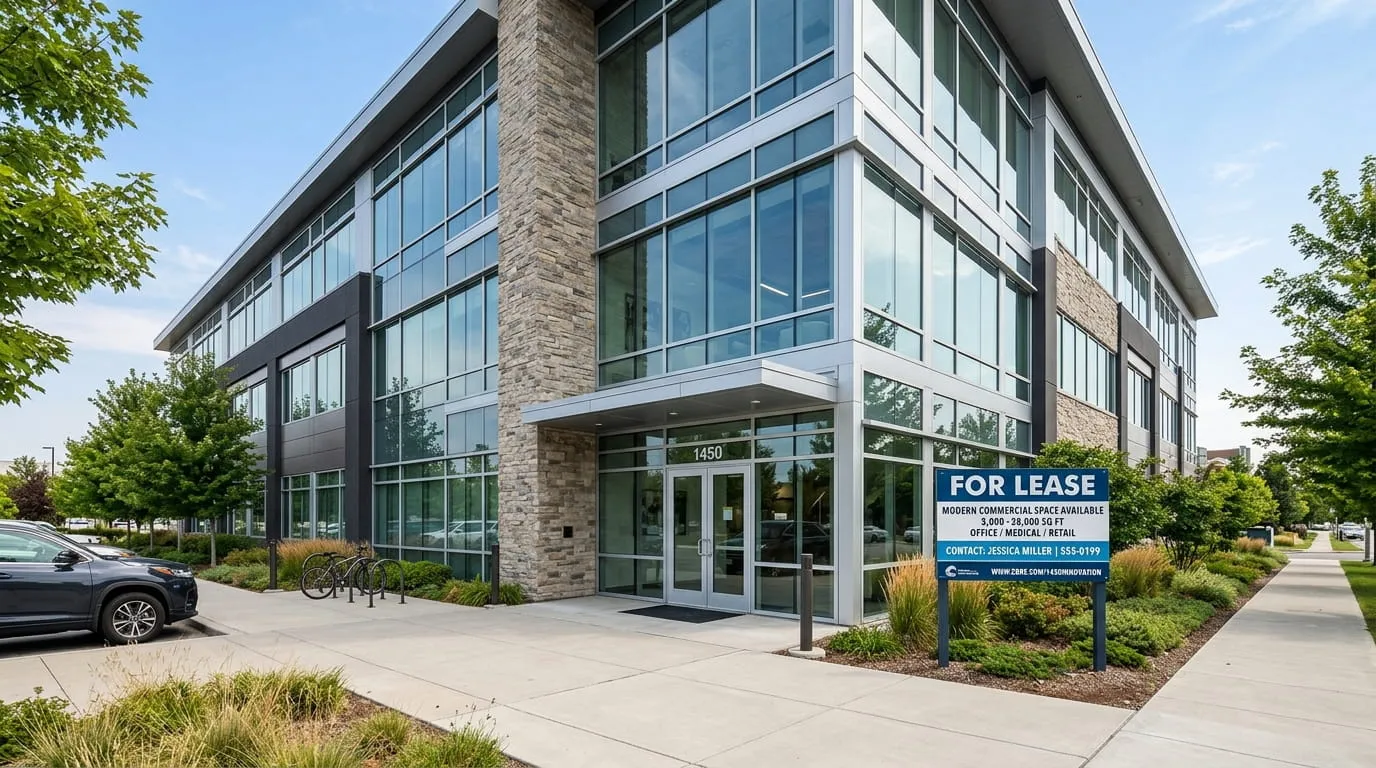


NNN stands for triple net lease, a type of commercial real estate lease where the tenant pays base rent plus a share of three specific property costs: taxes, insurance, and maintenance. Those three costs are the three N’s, and they sit on top of rent rather than inside it. Landlords use NNN leases most often for retail buildings, restaurants, and industrial space, since the structure shifts most of the day-to-day expense risk from the owner to the business occupying the space.
What Each “N” Stands For
Each N represents one cost category the tenant agrees to cover. The first N is property taxes, prorated based on the tenant’s share of the building. The second N is building insurance, usually carried under the landlord’s master policy and billed back to the tenant. The third N is common area maintenance, commonly shortened to CAM, which covers landscaping, parking lot repairs, snow removal, and upkeep of shared spaces.
None of the three N’s replace base rent. A tenant signing an NNN lease still pays market rent for the space, then adds these three cost categories on top, usually combined into one monthly NNN charge alongside the rent check.
How a Triple Net Lease Works Month to Month
Landlords estimate the coming year’s taxes, insurance, and CAM costs at the start of the lease, then divide that estimate into 12 equal monthly payments billed alongside base rent. Because actual costs move throughout the year, most leases include an annual reconciliation.

Say a landlord estimates $6.50 per square foot for the coming year’s NNN charges on a 3,000 square foot unit, billed at $1,625 a month. If actual costs come in at $6.20 per square foot once the year closes, the tenant receives a credit for the $0.30 per square foot difference. If costs come in at $6.80 per square foot instead, the landlord bills the tenant for the shortfall.
This reconciliation is where new investors and small business tenants alike get caught off guard. A quoted NNN rate is always an estimate until the numbers settle at year end, whether the surprise comes from a tax reassessment, a higher insurance renewal, or an unplanned repair.
Net, Double Net, and Triple Net Leases Compared
NNN is the most common version of a net lease, but it sits on a spectrum. The number of N’s in the name tells you how many expense categories moved from the landlord to the tenant.
| Lease Type | Tenant Pays Beyond Base Rent | Landlord Still Covers |
| Single Net (N) | Property taxes | Insurance, maintenance, structure |
| Double Net (NN) | Property taxes, building insurance | Maintenance, structure |
| Triple Net (NNN) | Property taxes, insurance, CAM | Structure, roof (usually) |
| Absolute NNN | All of the above, plus roof and structure | Little to nothing |
An absolute NNN lease, sometimes called a bondable lease, pushes even roof and structural repairs onto the tenant, which is why these leases show up often in single-tenant investment properties leased to national retail and restaurant chains. Fewer landlord obligations generally mean a lower cap rate for the investor buying the property, since there’s less ongoing cost and risk to price in.
What a Triple Net Lease Costs a Tenant: A Quick Example
Listings for NNN space usually show two separate numbers: a base rent per square foot and an estimated NNN charge per square foot. A 2,000 square foot retail unit quoted at $22 base rent and $7 NNN costs $29 per square foot per year in total, or about $4,833 a month, not $22 per square foot as it might first appear.
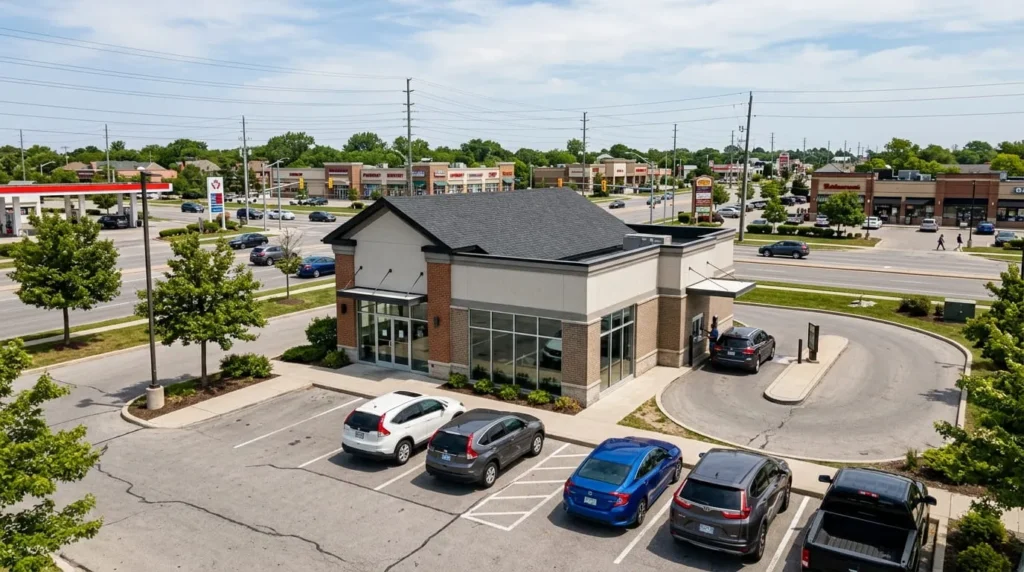
That gap trips up a lot of first-time tenants shopping listings on their own. Before signing, it’s worth asking the landlord for the last two years of actual NNN charges rather than relying on the marketing estimate alone, since a fresh estimate can run well below what a property has historically cost to operate. Most NNN leases also build in an annual base rent increase, often 2 to 3 percent, which is separate from any change in the NNN charges themselves.
Who a Triple Net Lease Benefits
Landlords generally benefit most from an NNN structure. Passing taxes, insurance, and maintenance through to tenants keeps income more predictable, since rising costs don’t erode returns the way they would under a lease where the landlord absorbs those expenses.
Tenants get something in return. Base rent on an NNN lease usually runs lower than an equivalent full-service lease, since the landlord isn’t building in a cushion for expenses that shift unpredictably from year to year. Tenants also get more visibility into what they’re actually paying for: instead of an opaque number folded into gross rent, an NNN lease breaks costs out line by line, which makes it easier to question a CAM charge that looks out of step with prior years.
NNN Cap Rates in Today’s Market
Because NNN leases hand most expense risk to the tenant, single-tenant NNN properties trade on cap rate the same way any other income property does, with lease length and tenant credit driving most of the difference between one listing and the next.
According to The Boulder Group’s second quarter 2026 net lease research, overall single-tenant net lease cap rates sat at 6.82 percent, with retail averaging 6.60 percent, industrial at 7.25 percent, and office holding at 7.90 percent. Interest rates are a big part of why: with the Federal Reserve holding rates steady through the first half of 2026 and the 10-year Treasury drifting higher late in the second quarter, net lease buyers had less room to compress cap rates than they did earlier in the cycle.

Tenant-level differences show up clearly within these averages. Boulder Group’s first quarter 2026 data put Walgreens-leased properties at an 8.10 percent median asking cap rate and CVS-leased properties at 6.80 percent, even though both are pharmacy chains with long-term leases. The gap comes down to remaining lease term, store-level performance, and how the market views each tenant’s credit at that moment. Some net lease investors take this a step further and compare a property’s cap rate to the yield on that same tenant’s corporate bonds; the extra spread reflects the added risk and illiquidity of owning real estate instead of a bond, plus whatever residual value the building carries once the lease ends
What to Watch for Before Signing an NNN Lease
The word triple net sounds simple, but the details live in the lease language, not the label. Two properties both marketed as NNN can carry very different obligations depending on how the lease defines CAM, what’s excluded from the estimate, and whether repair costs are capped.
Roof and structural responsibility is the biggest one to check first. Some triple net leases leave the roof and structure with the landlord despite the NNN label, while absolute NNN leases push those costs onto the tenant. A single major repair, like a new roof or an HVAC replacement, can turn a predictable NNN charge into a large unexpected bill if the lease isn’t clear on who pays.
Lease term length matters just as much as expense structure. A 15-year lease with several renewal options at pre-set rent bumps behaves very differently from a lease with two years left and no committed renewal, even though both might be labeled NNN, since the second carries far more re-leasing risk for whoever owns the property. A commercial real estate attorney or broker who works with net lease properties regularly can review the specific lease language before anything gets signed, which matters more than the NNN label alone
NNN vs a Gross Lease
A gross lease sits at the other end of the spectrum from NNN. Under a full-service gross lease, the landlord pays taxes, insurance, and maintenance out of the rent it collects, and the tenant writes one simple check each month with no year-end reconciliation.
A modified gross lease splits the difference. The tenant might cover utilities and a share of CAM while the landlord still handles taxes, insurance, and structural upkeep, depending on what the two sides negotiate. It’s a common middle ground in office buildings where a straight gross or straight NNN structure doesn’t fit either side’s needs.
Office tenants see gross and modified gross leases more often, while retail, restaurant, and industrial space leans toward NNN. Neither structure is better outright. A gross lease offers predictability for the tenant, while an NNN lease usually comes with a lower starting rent and shifts both the savings and the risk of rising costs onto whoever occupies the space.
Whichever side of the lease someone is on, the acronym itself only sets the frame. What actually shows up on a tenant’s monthly bill, and what a landlord can count on collecting, comes down to the specific numbers and definitions written into that lease.